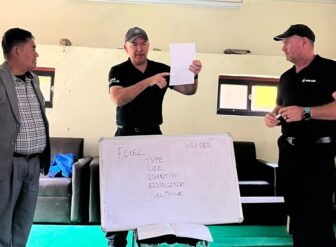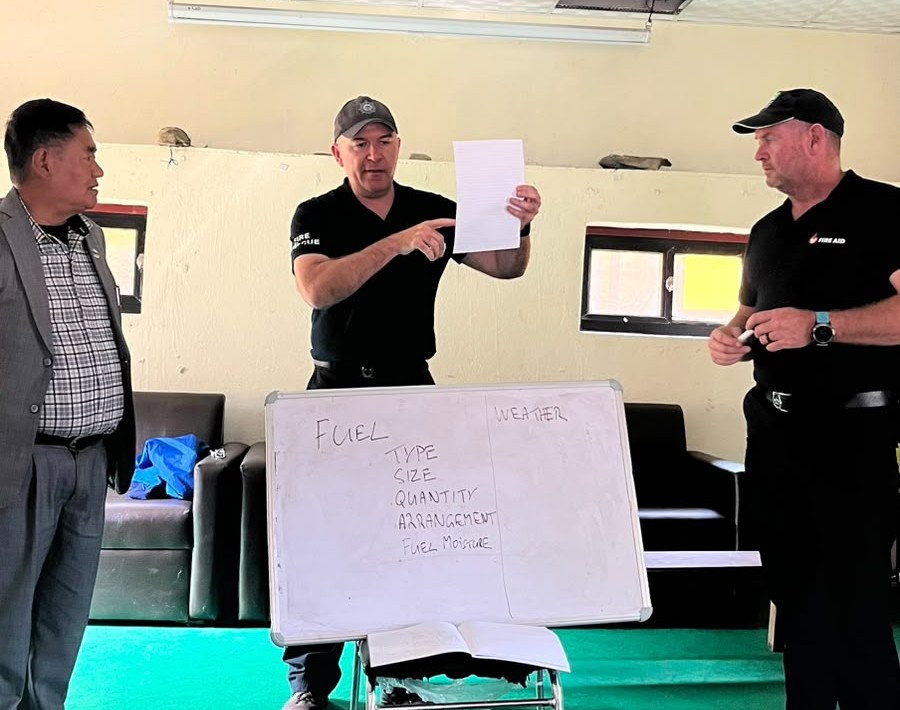
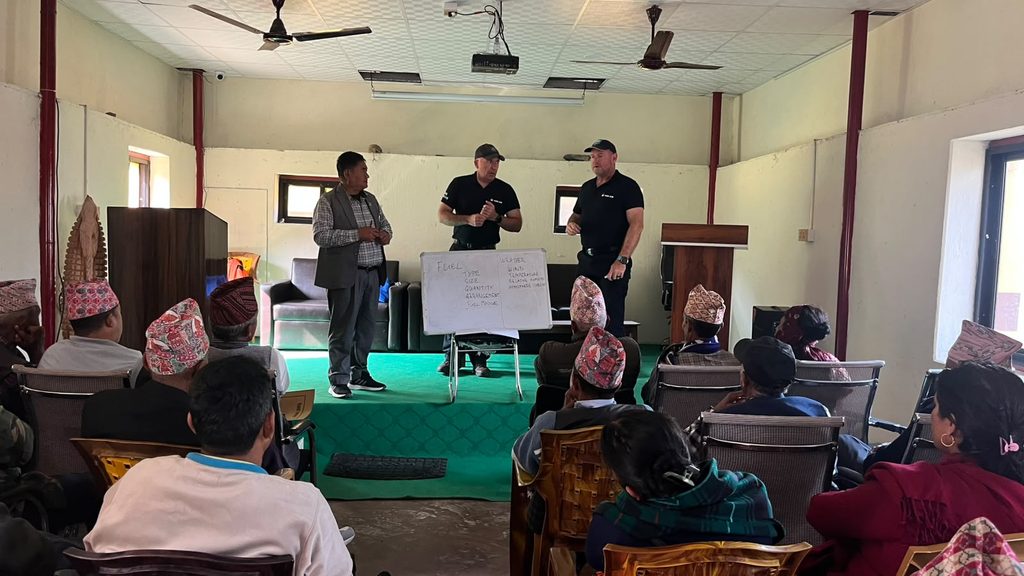
Pokhara: A fire management training program was conducted in Bamdi, Ward No. 23 of Pokhara Metropolitan City, with the aim of reducing human, property and environmental losses caused by forest fires and other fire incidents.
Rob McVey and Ben Schmidt, firefighting experts with more than 20 years of experience in Australia’s fire services, provided training to representatives of 22 community forests, members of various committees and local residents. They are also volunteers with Fire Aid UK.
The training was organized by Dambar Pun, chairperson of the Jauchhare Dandakharak Birim Community Forest and director of Back to Nature. It covered the causes of fire, how fires spread, methods of fire control and the technical aspects required for effective firefighting. Representatives of the Community Forest Users Federation in Ward No. 23 and the Panchase Forest Conservation Area also participated.
Participants were introduced to the three basic elements required to start and sustain a fire: fuel, heat and oxygen. They were trained in the scientific principle that a fire can be controlled by removing or reducing the availability of any one of these three elements.
Fuel refers to any combustible material, including wood, firewood, paper, clothes, petrol, diesel, plastic and dry leaves, grass and branches found in forests. Heat is the energy required to raise fuel to its ignition temperature, while oxygen in the air is essential for combustion. The atmosphere normally contains approximately 21 per cent oxygen.
Fire can be controlled by reducing heat, cutting off the oxygen supply or removing combustible materials that could allow the fire to spread. In forest fire management, effective measures include clearing dry leaves and vegetation, creating firebreaks and using water safely to reduce the temperature of burning materials.
Ramkaji Gurung, chairperson of Pokhara Metropolitan City Ward No. 23, said the training would help strengthen the local community’s capacity to control fires. He described raising public awareness about the causes of fire and scientific methods of fire control as an important achievement of the program.
Rob McVey said conducting firefighting training in Nepal was a new experience for him. He expressed happiness at the opportunity to share firefighting knowledge and skills with students and community forest members.
He also expressed hope that he would have further opportunities to conduct more advanced firefighting training in the future and share his experience with a wider range of communities. He thanks organizer Dambar Pun for providing the opportunity and said he was interested in continuing such cooperation.
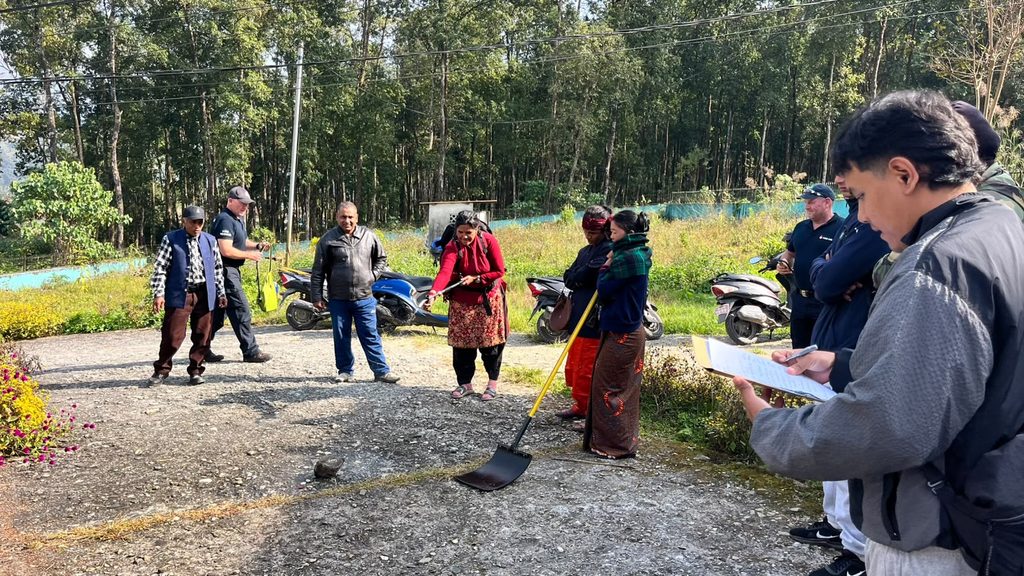
Another firefighting expert, Ben schmidt , expressed his happiness at being able to share his experience with local communities through collaboration with community forests and local government. He said strengthening local communities’ capacity to manage fires through active participation would help reduce damage caused by forest fires and other fire incidents.