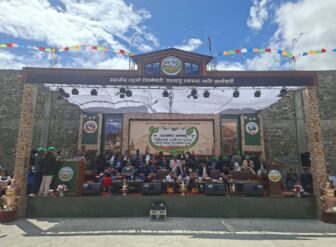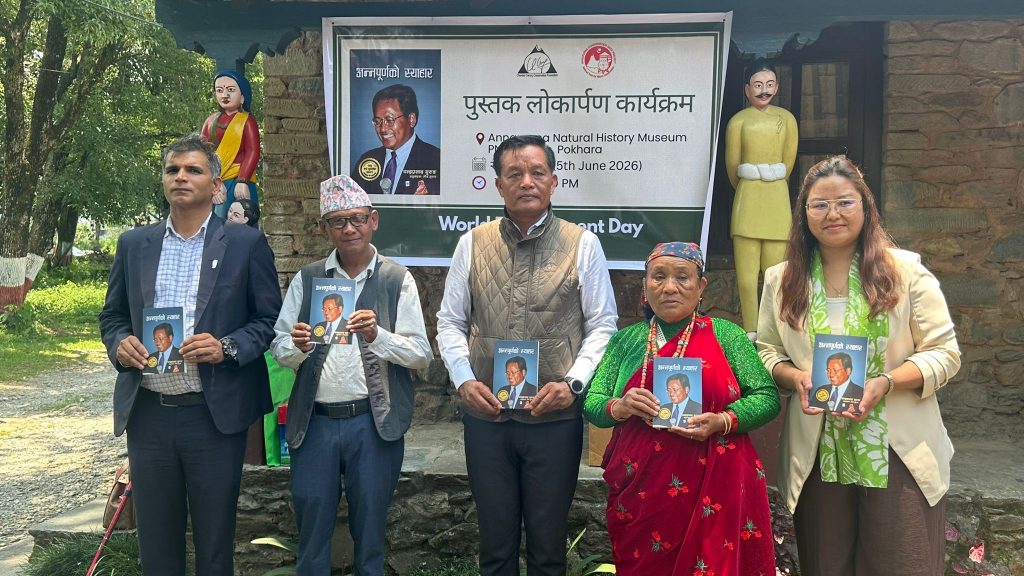
Pokhara, 5 June 2026: The Nepali edition of Caring for the Annapurna, titled Annapurnako Syahar, a book that reflects the conservation vision of the late Dr. Chandra Prasad Gurung and the history connected with the Annapurna Conservation Area, was launched in Pokhara.
The launch program was held at the Annapurna Conservation Area Project museum located on the premises of Prithvi Narayan Campus. More than 120 people attended the event, including conservationists from the Annapurna Conservation Area, representatives from various rural municipalities, current and former staff members of the Annapurna Conservation Area Project, community leaders, and well-wishers.
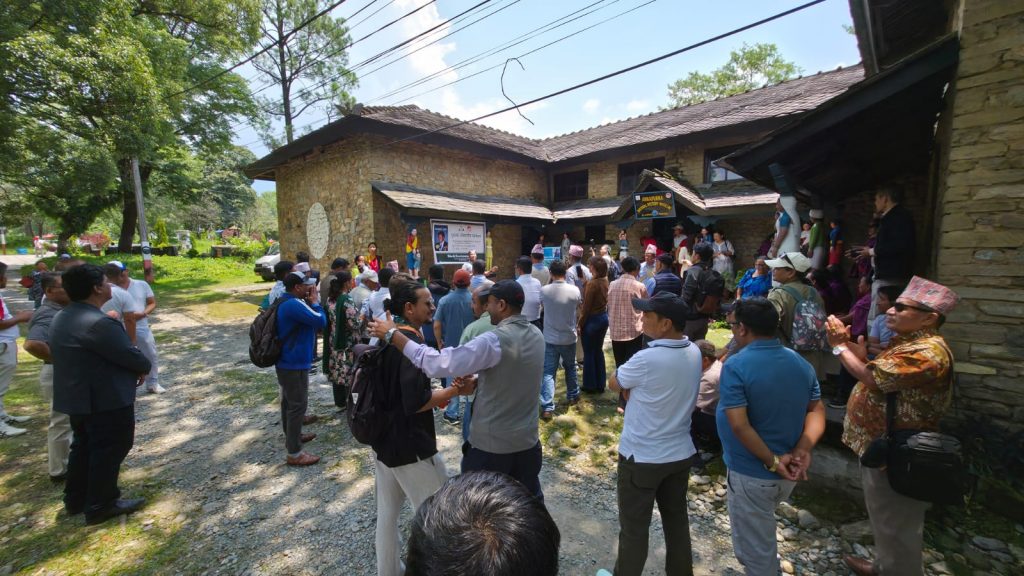
Speaking at the program, former federal parliamentarian and Chairperson of the Conservation Area Management Committee, Man Bahadur Gurung, said that the contribution of the late Dr. Chandra Gurung has still not been sufficiently recognized and honored. Recalling that an orchid found in Panchase has also been named after the late Dr. Chandra Prasad Gurung, he said, “We have still not been able to properly recognize and honor him. If Dr. Gurung had not introduced the concept and initiated the Annapurna Conservation Area in our region, we would have been far behind in terms of conservation and development.”
Dr. Rabin Kadariya, Chief of the Annapurna Conservation Area Project, said that ACAP continues to move forward along the path shown by Dr. Gurung. According to him, concepts such as community-based conservation, local participation, sustainable use of natural resources, and biodiversity conservation are all continuations of the vision Dr. Gurung had developed.
Dr. Roshan Sherchan said that he felt proud to be connected with the memory and book of a person who, nearly four decades ago, had dreamed that conservation with communities was both possible and sustainable. He noted that Dr. Gurung’s thinking was far ahead of its time, and that the idea of placing communities at the center of conservation remains equally relevant today.
Devi Jung Gurung, Chairperson of Madi Rural Municipality, said that the conservation dream envisioned by the late Dr. Chandra Gurung has still not been fully realized. He said, “Four decades ago, when the Gurung community was heavily dependent on hunting and natural resources, inspiring communities toward conservation was itself a great achievement.” He emphasized that Dr. Gurung’s vision should be further advanced through collaboration among local governments, conservation organizations, and communities.
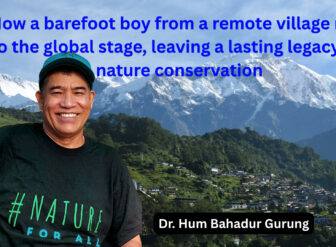
Conservationist Dr. Hum Bahadur Gurung said that the publication of the book in Nepali is an important achievement for the conservation sector. He expressed happiness that the manuscript provided by Dr. Bob Ryan at his garage in Blue Mountains National Park, Australia, in 2012 was first published in English and has now been published in Nepali. “Being able to publish this book first in English and now in Nepali makes me feel that we have contributed, even if only a little, to fulfilling Dr. Chandra Gurung’s dream,” he said. He added, “It makes me very happy to hear that the concept of community-based conservation, which began in Ghandruk, has become a model not only in Nepal but also around the world.”
The book includes the early vision of the Annapurna Conservation Area, studies, collaboration with communities, and the basic principles of conservation. Following a six-month study, the Government of Nepal initiated the Annapurna Conservation Area Project based on the recommendations of a team that included Dr. Chandra Gurung. The launch program was considered even more historic because the Annapurna Conservation Area Project had originally started its office on the premises of Prithvi Narayan Campus.
Purna Jung Kunwar, who worked from the same premises during the early phase of the Annapurna Conservation Area Project, recalled his experiences working with Dr. Gurung. He described Dr. Gurung as a simple, approachable, and highly supportive person toward staff, and said that everyone regarded him with great respect. He also remembered spending many nights at the office premises because of work, even though his home was nearby. He added, “Dr. Gurung used to say that we must work by placing communities at the center.”
Participants said that Dr. Chandra Gurung’s contribution was not limited only to the establishment and development of the Annapurna Conservation Area, but was also important in institutionalizing the concept of community-based conservation in Nepal. He remained active in the conservation movement until his death in the Ghunsa helicopter crash.
Shikha Gurung Khetan, President of the Chandra Gurung Conservation Foundation, informed the gathering that the income generated from book sales is being used for training and mentorship of young conservationists, as well as for engaging the new generation in conservation.
Participants emphasized the need to continue such publications, dialogues, and conservation practices to pass on Dr. Chandra Gurung’s dream and contributions to future generations. The book was translated by Tirtha Gurung, while the program was facilitated by poet Ramesh Shrestha.