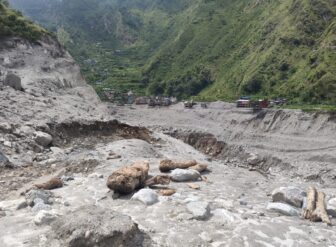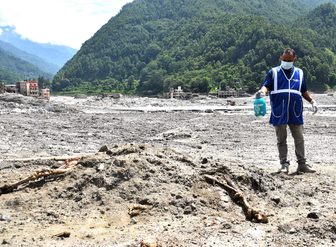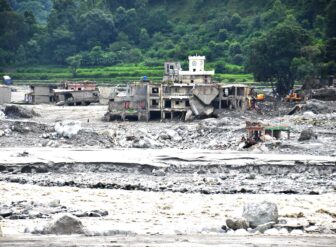
Prime Minister Balendra (Balen) Shah has said that the devastating floods in the Bhote Koshi–Trishuli region were not merely a tragedy for Nepal but a warning of the kind of catastrophe the world could face in the future due to the growing impacts of climate change.
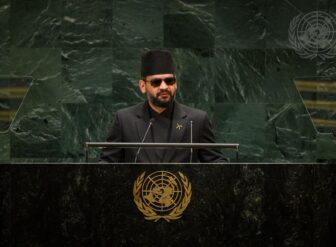
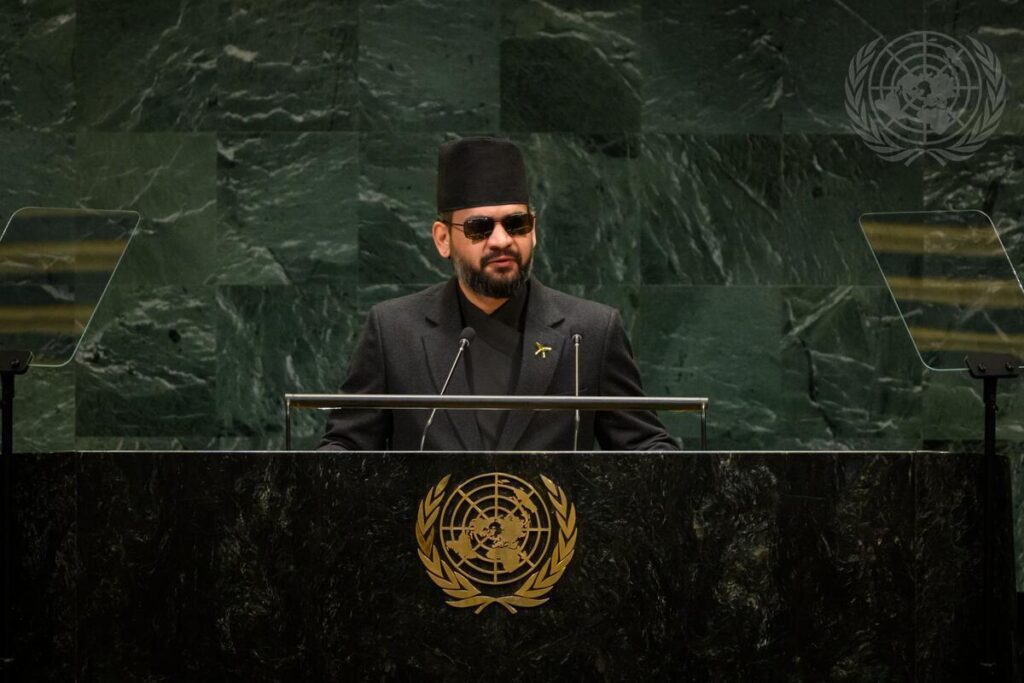
Addressing the 81st session of the United Nations General Assembly, Prime Minister Shah said Nepal had experienced the devastating consequences of the Bhote Koshi floods firsthand and urged the international community to take the increasing risks posed by climate change seriously and act before such disasters become more frequent and destructive.
“We experienced the devastating reality of the Bhote Koshi floods. This is not just a warning for Nepal; it is a warning for the world,” he said.
Shah said he had wanted to speak about development, democracy, peace and the hopes of a young nation, but the scale of the disaster had compelled him to speak about death, destruction and the suffering of affected communities.
“I am speaking for the families who are still waiting for their loved ones, many of whom will never return home. I am speaking for communities searching for their people beneath mud, rocks and water, whose bodies may never be recovered,” he said.
He said bridges, roads, schools, homes and sources of livelihoods had been swept away within minutes, disrupting the country’s progress toward achieving the Sustainable Development Goals.
“What the world witnessed four weeks ago was not merely a local tragedy in Nepal. It was a warning to the world. And I ask you today: Did we truly hear that warning?” he said.
Prime Minister Shah recalled that three years ago, the UN Secretary-General had stood in the shadow of Mount Everest and warned about the growing climate catastrophe.
“In Nepal, we heard it. Our communities heard it. Scientists around the world heard it, and they repeated those warnings with evidence. But we, political leaders, failed to translate those warnings into action with the speed and scale required by people at risk,” he said.
Shah said the tragic consequences of that failure had become evident with the disasters of the past month.
He said rising temperatures were destabilizing the fragile Himalayan environment, increasing the risks of floods, landslides and other cascading disasters.
The destruction caused by the floods in the Bhote Koshi and Trishuli regions had affected communities on both sides of the Nepal-China border, with impacts extending further south toward India, he said.
“This teaches us something fundamental: climate change knows no borders. Glaciers and floods do not carry stamps or passports when they travel,” Shah said.
The prime minister said he had not come to the United Nations to blame any particular country or continent for the climate crisis facing Nepal. Instead, he called for collective action and international solidarity to address the crisis.
“We do not want climate change to become another geopolitical battlefield. We are here to call on everyone to renew their commitment and share responsibility and solidarity,” he said.
Shah also referred to the principle of “common but differentiated responsibilities and respective capabilities” recognized under the United Nations Framework Convention on Climate Change.
“Countries that have historically contributed more to the climate crisis and have greater capacity to address it must shoulder greater responsibility,” he said.
He stressed that climate justice should not remain merely a slogan confined to United Nations documents but must be translated into concrete action.
Shah said countries such as Nepal, which contribute relatively little to global greenhouse gas emissions but face disproportionate risks from climate change, need greater international support for climate adaptation, disaster risk reduction, reconstruction, and addressing loss and damage.
He called for stronger international cooperation, adequate climate finance and greater protection for communities living in climate-vulnerable regions, particularly in the Himalayas.