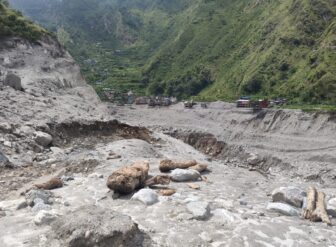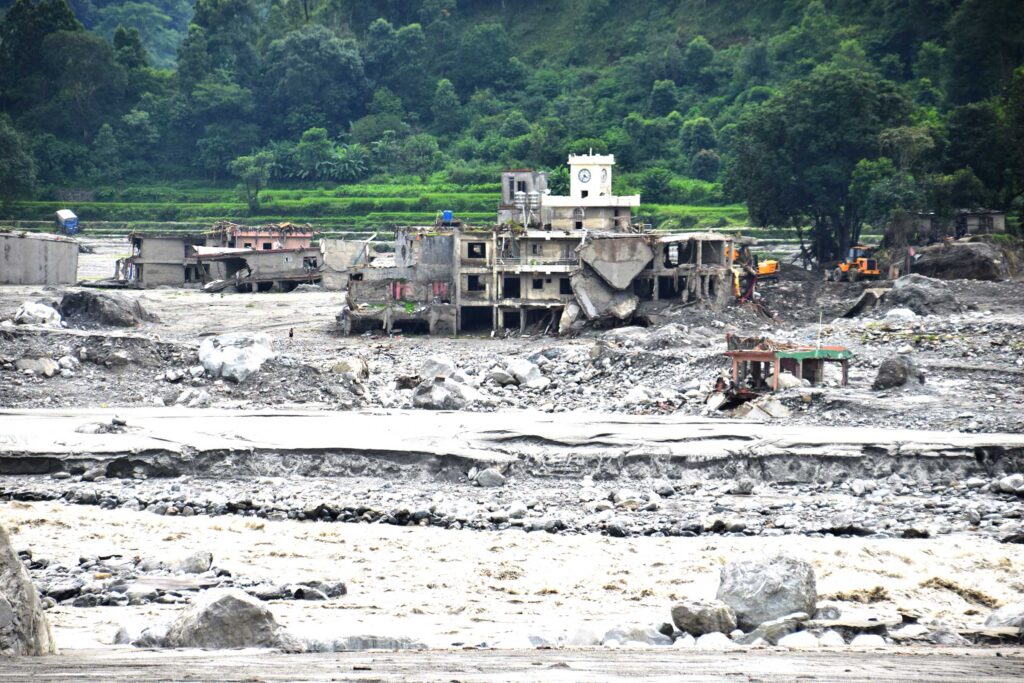
Betravoti Bazaar is a historic marketplace with both religious and historical significance. The area is associated with the Nepal–Tibet war and is also regarded as a sacred site. The Betravoti River, which flows through the area, is considered a holy river and is revered as a religious pilgrimage site known as Uttar Gaya Dham. A fair used to be held along the river near the Ram Temple during Kuse Aunsi, the Hindu festival observed to honor fathers and ancestors.
Besides its religious importance, Betravoti Bazaar is historically known as the place where the Nepal–Tibet war came to an end. Located on the border of Rasuwa and Nuwakot districts, the area has a historical connection to the Nepal–Tibet agreement of 1792 BS (1735 AD), which brought the war to an end. The stone believed to mark the Betravoti Treaty is also said to be located in the area.
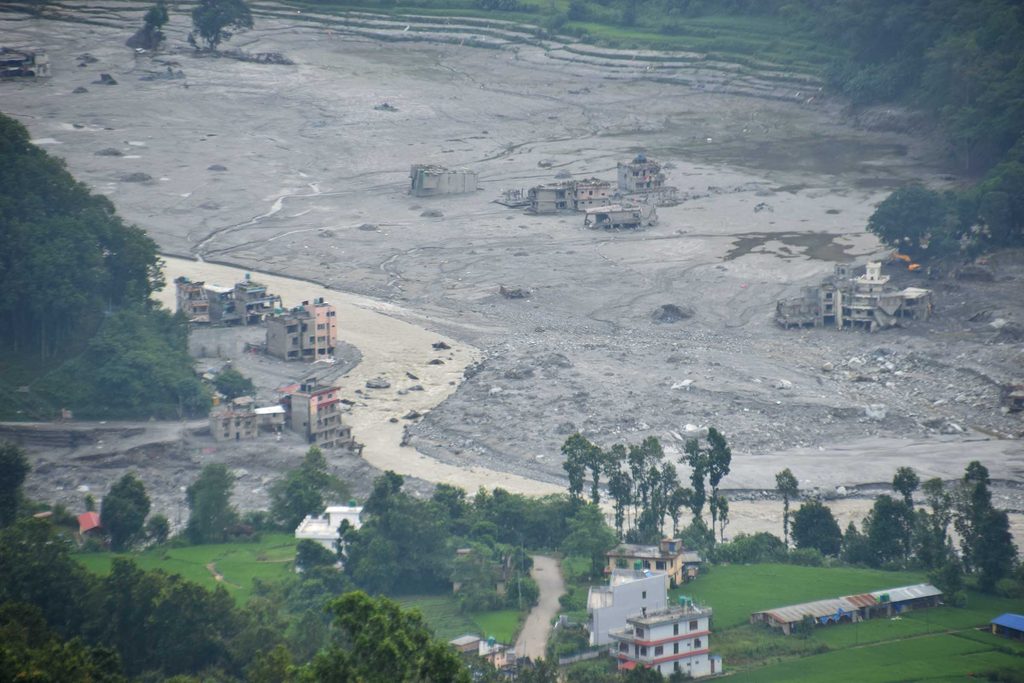
Betravoti Bazaar. Picture : Krishna Mani Baral
As the Kerung border point developed in recent years as an important Nepal–China trade route, Betravoti Bazaar also became increasingly populated and commercially active. A steady flow of tourists, traders and religious pilgrims used to pass through the area on their way from Galchhi in Dhading via Trishuli and Betravoti to the Kerung border.
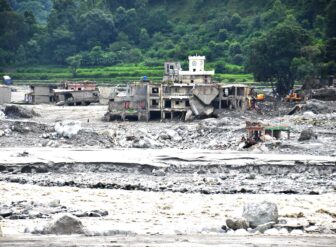
However, the glacial flood that struck on Bhadra 10 transformed not only Betravoti Bazaar but also villages and settlements throughout the area into riverbeds within minutes. The destruction caused by what has been described as a “Himalayan tsunami” is devastating. Anyone visiting the flood-affected areas is deeply moved by the scale of the destruction.
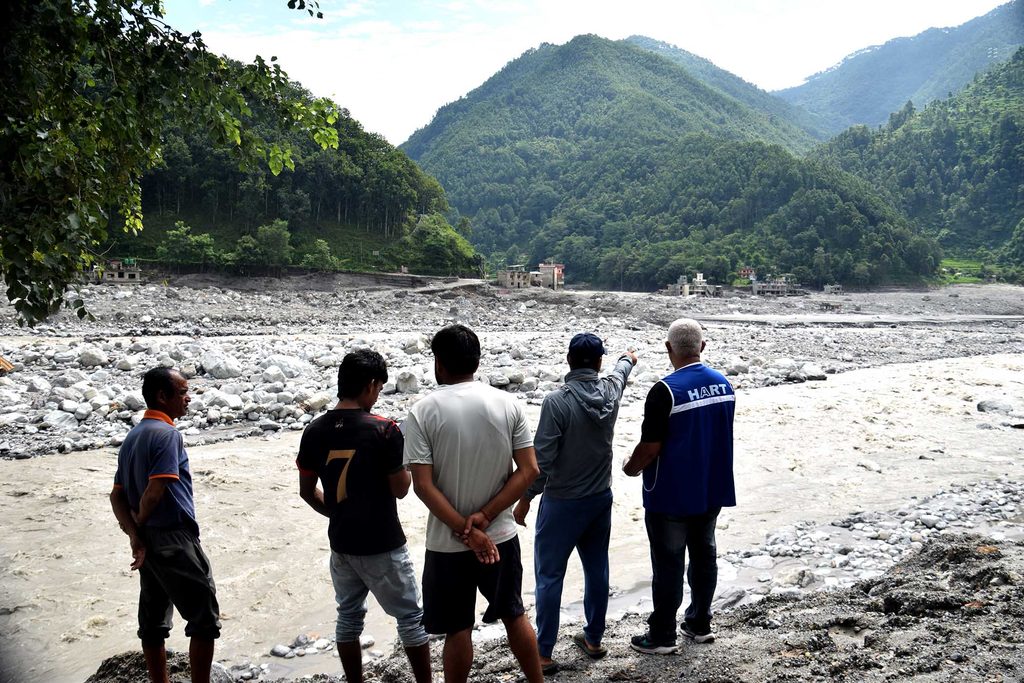
Locals and people from Pokhara carrying relief materials observe the Betravoti Bazaar. Picture: Krishna Mani Baral
As global temperatures continue to rise, the Himalayan region is becoming increasingly vulnerable. Mountains that once remained covered in thick snow are gradually exposing dark rock surfaces. The risks of glaciers melting, ice and rock masses breaking away due to rising temperatures, and glacial lakes bursting and triggering catastrophic floods are increasing.
Countries such as Nepal, whose contribution to global temperature rise is negligible, are nevertheless increasingly bearing the consequences of climate change because of their location in the Himalayas.
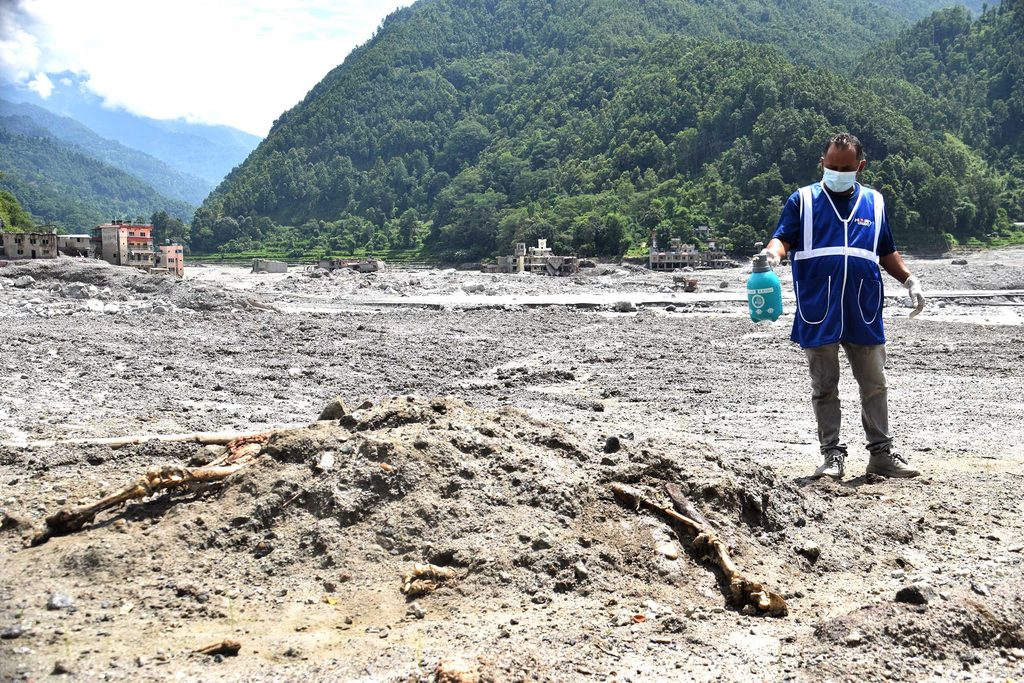
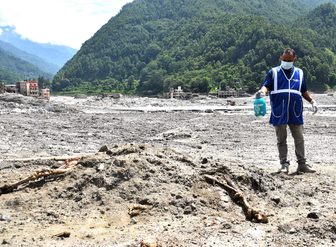
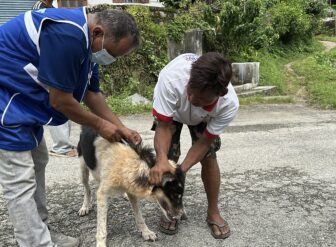
Representatives of the Himalayan Animal Rescue Group spray disinfectant on the carcass of an animal washed downstream by the flood along the Trishuli River in Bidur–7, Nuwakot. Photo: Krishna Mani Baral
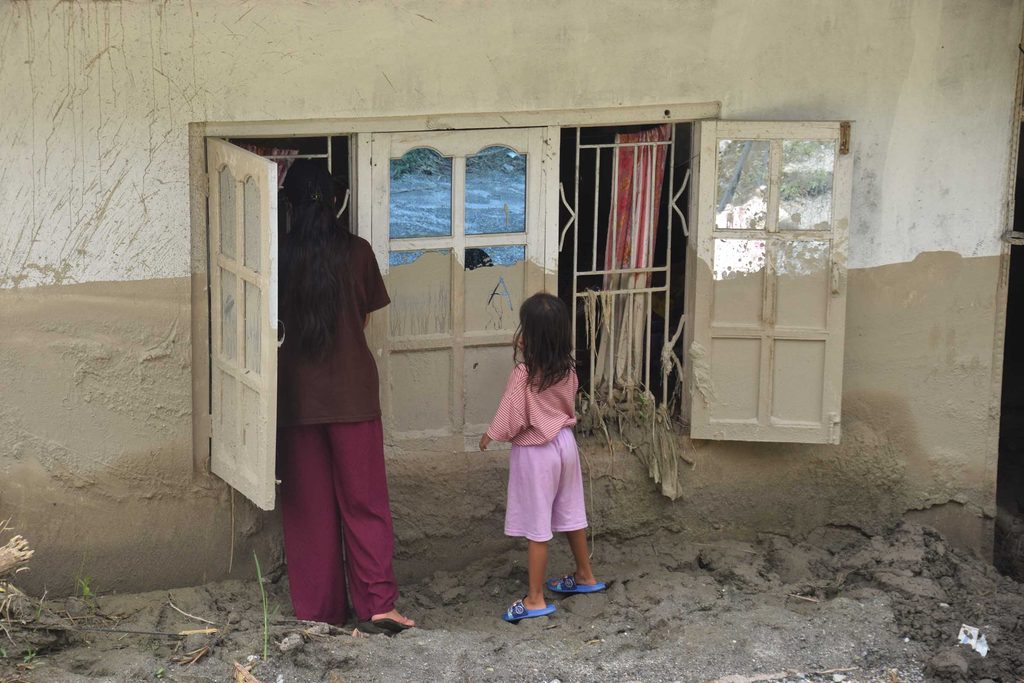
Girls from Nuwakot-7 look at their home, which was damaged by the Bhotekoshi flood. Picture : Krishna Mani Baral
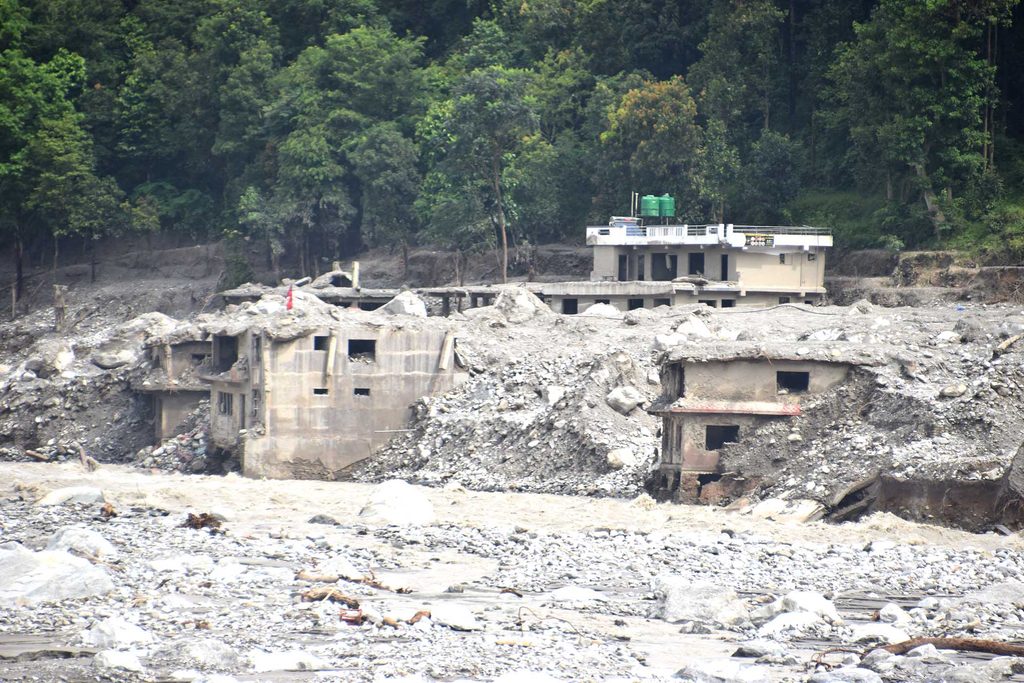
Betravoti Bazaar . Picture : Krishna Mani Baral