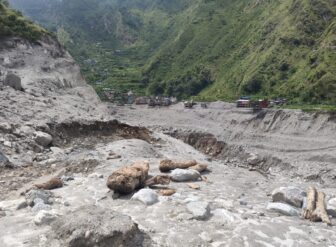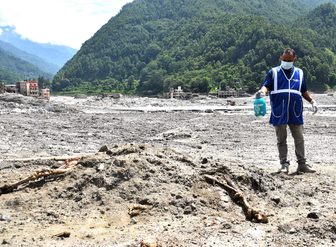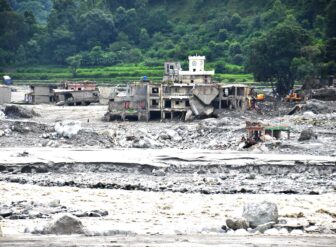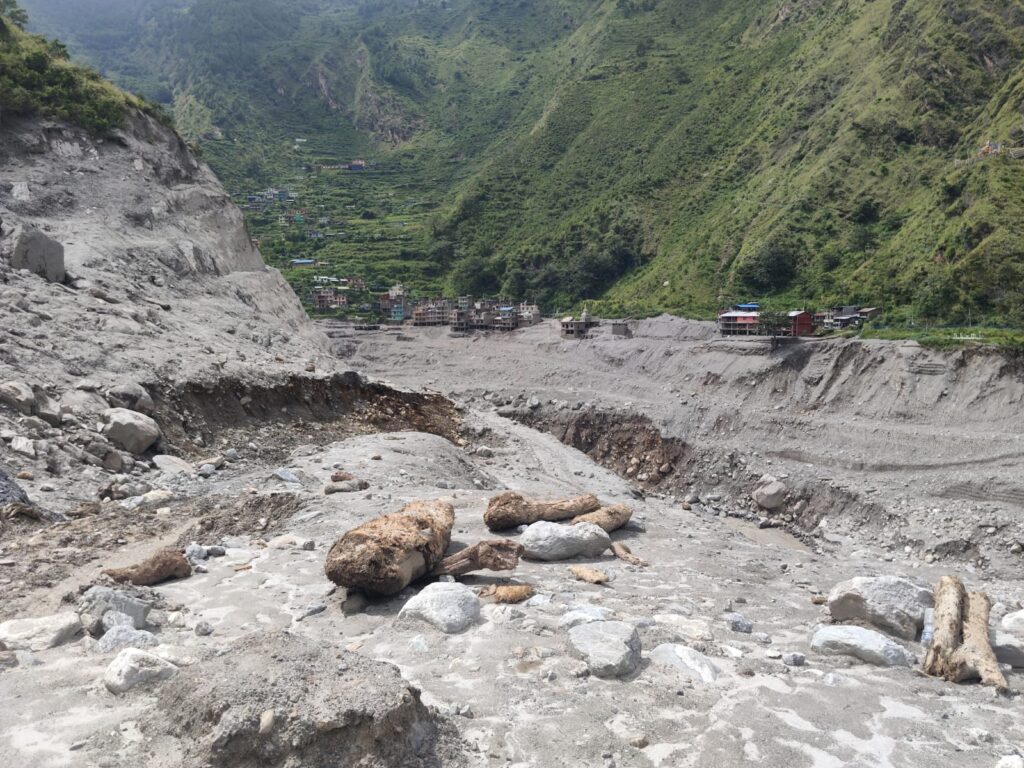

On August 26, the Bhotekoshi-Upper Trishuli watershed suffered an unprecedented catastrophe: a glacier collapse-led flood that claimed approximately 1,400 lives, with over 6,000 people still missing. The total economic loss is estimated at nearly $4.8 billion—a figure that defies conventional climate modeling, even under the most extreme scenario (SSP5-8.5). Existing Early Warning Systems (EWS) proved incomplete and dysfunctional in such an extreme event. The preliminary Rapid Damage and Needs Assessment (RDNA) projects reconstruction needs of NPR 723.31 billion, confirming the massive scale of the disaster. Delayed response mechanisms have compounded the complexity of recovery, leaving victims in a perilous limbo.
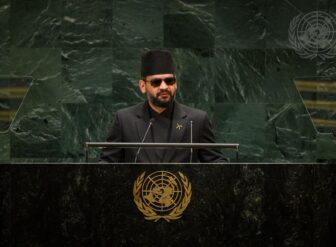
Coinciding with this tragedy, the UN General Assembly convened last week, and Nepal took the floor to plead for assistance. However, the $20 million requested—just 0.7% of the Loss and Damage (L&D) Fund’s $2.8 billion—is a trivial sum that fails to reflect the scale of the disaster. Worse, it may take considerable time to materialize, as the Fund’s long-term disbursement guidelines are yet to be approved. Established in 2022, the L&D Fund has begun accepting requests, but no funds have been disbursed to any country. It currently holds about $500 million, while over $800 million has been requested by various nations. This bureaucratic inertia is unacceptable when lives and livelihoods are at stake. We urgently need a prompt, just coping mechanism—alongside mitigation and adaptation funding—to respond to the Bhotekoshi flood and its victims, both now and in the future. We are grateful to the generous hands that rescued the vulnerable and extended support over these three weeks. While addressing the immediate loss, we must also design and deploy lasting impact projects that can address and recover from present and future Bhotekoshi-scale losses.
The Bhotekoshi flood was a devastating climate disaster that caused huge loss of lives, property, and livelihoods. It shows that Nepal and other mountain countries urgently need stronger climate action, better early warning systems, and timely support to face future disasters.
Beyond the L&D Fund, the Green Climate Fund (GCF) holds $20.4 billion, though its processes are equally cumbersome. Nepal has received only about $160 million (0.7%) through six projects for adaptation and mitigation. Utilizing the recommendations of the RDNA and PDNA and the pledges made at the UNGA, we could ask the GCF to ease its application process and provide a wild card in getting funded to protect mountain biodiversity and livelihoods and de-risk climate threats. Lowering glacier lake levels, advancing and extending early warning systems, monitoring snow-peaked mountains and glaciers, enabling and incentivizing local governments and communities in resettlement programs, and evacuating settlements haphazardly colonized along the banks of perennial and glacier-fed rivers are important, among others. Nepal has one project on de-risking GLOF funded by the GCF last year—a $36.16 million grant for protecting livelihoods and assets at risk from GLOFs and climate change-induced flooding in the glacial river basins of Nepal. We need similar risk-offsetting projects that look after mountains, glaciers, livelihoods, and biodiversity. The Nepal government has identified 21 glacial lakes across the northern part of the country as potentially dangerous. It is high time to work on these mountains, glaciers, and people through the rapid funding mechanisms of the GCF and the L&D Fund.
For long-term, sustained recovery, we must adopt a blended approach of mitigation, adaptation, and coping interventions, and expand the scope of local, national, and international funding and response approaches. Another potential multilateral climate fund is the Adaptation Fund (~$1.6 billion). However, Nepal’s representation in this fund is modest. So far, only two projects worth $19.5 million are underway, despite Nepal having two accredited national implementing entities—the National Trust for Nature Conservation (NTNC) and LI-BIRD—that can directly access funding. Similar gateways such as the Special Climate Change Fund (SCCF), Least Developed Country Fund (LDCF), Global Environment Facility (GEF), and Kunming Biodiversity Fund (KBF) are available, though their funding for climate change and disasters is conditional.
To sum up, the Bhotekoshi disaster is not merely a national tragedy; it is a warning to the world. Nepal contributes less than 0.1% of global greenhouse gas emissions, yet it pays the ultimate price for a crisis it did not create. The climate finance architecture, as it stands, is failing the most vulnerable. We need rapid, accessible, and adequate funding—not fragmented support, unpredictable finance, and slow-moving mechanisms. We must also submit multiple quality proposals; a collective, wider reach and mass-scale applications may yield better results. The time for action and justice is now.
(Photo: Dr Chandra Subedi)