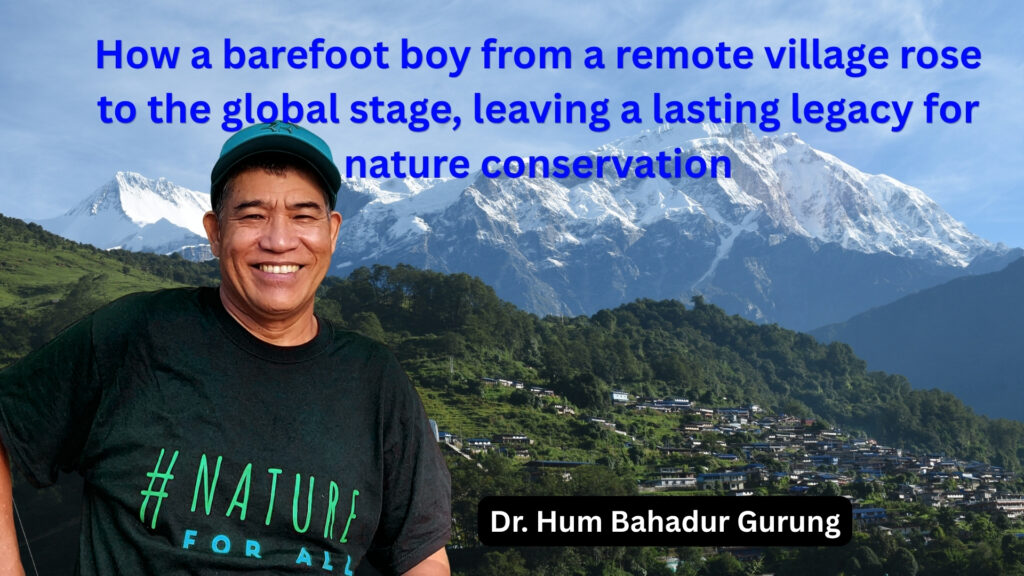
Some people find a career, while others discover a purpose that shapes their entire life. For Dr. Hum Bahadur Gurung, nature conservation has never been just a profession. It has been a lifelong commitment to protecting nature, improving people’s lives, and inspiring future generations. His remarkable journey began in the small Himalayan village of Sikles in Kaski District, Nepal, and has taken him to the global conservation community, where he is now recognised as one of Asia’s respected conservation leaders.
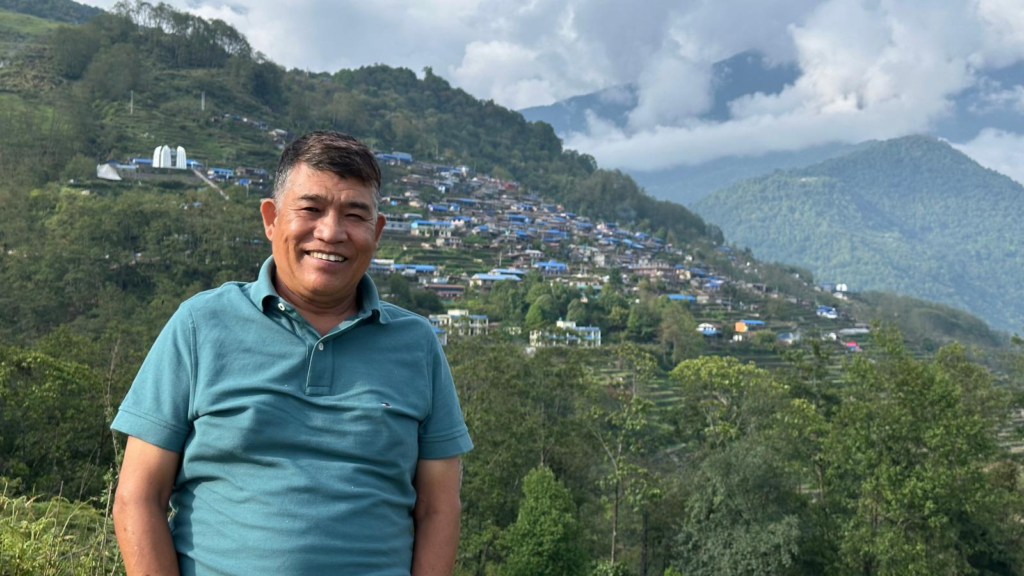
Born in 1965, Dr. Gurung grew up in a farming family surrounded by forests, rivers, mountains, and wildlife. Life in Sikles was simple. Like other village children, he attended school during the day and helped his parents in the fields after class. There were no modern facilities, but there was a strong culture of hard work, honesty, and respect for education. From an early age, he loved exploring nature, climbing trees, collecting wild fruits, and observing birds and forests. Without realising it, these childhood experiences were preparing him for the life he would later dedicate to conservation.
His teachers remember him as a hardworking and disciplined student who consistently ranked first in his class during primary school. After completing his early education in Sikles, he walked an entire day’s journey to Pokhara to continue his studies. Once again, his determination paid off, and he became one of the top students at Amar Singh High School. Those early successes taught him an important lesson that remained with him throughout his life: determination and hard work are more powerful than circumstances.
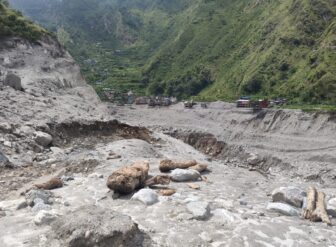
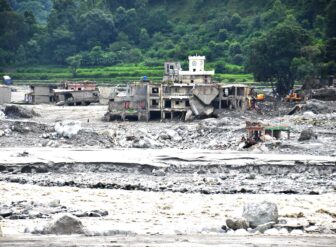
One childhood experience left a lasting impression on him. While studying in Grade Seven, his school organised an educational trip to Hugu and Kahphuche, where students walked barefoot through forests and mountain trails, learning directly from nature. More than forty-five years later, Dr. Gurung returned to the same place and was deeply moved to see that the glacier he had admired as a child had turned into a glacial lake because of climate change. The experience strengthened his belief that conservation is not only about protecting wildlife but also about protecting the future of people and the planet. He often says that learning from nature leaves a deeper impact than learning only from books.
Like many young people from rural Nepal, he moved to Kathmandu in search of higher education and better opportunities. He enrolled in Pulchowk Campus to study civil engineering, hoping to become an overseer. While studying, he worked as the Personal Assistant to the late Radhe Shyam Kamaro, Nepal’s former Minister of Law, Justice and Social Welfare. Working with Kamaro became one of the greatest turning points in his life. More than an employer, Kamaro became his first mentor, teaching him, honesty, discipline, and the importance of serving society. During this period, Dr. Gurung also met the renowned geographer Dr. Chandra Gurung, whose dedication to research and development inspired him to think beyond a conventional career. Meeting accomplished scholars and public leaders opened his mind to new possibilities and encouraged him to dream bigger than he had ever imagined as a village boy.
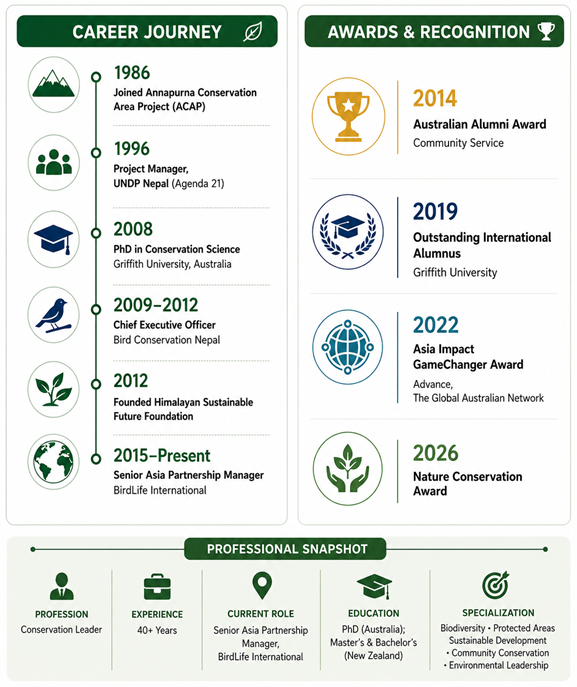
Soon afterwards, another opportunity changed the course of his life. He saw a vacancy announcement for the newly established Annapurna Conservation Area Project (ACAP), Nepal’s first integrated conservation and development programme. Although he knew little about conservation at that time, he applied and was selected. At just twenty-one years of age, he joined ACAP as one of its earliest staff members.
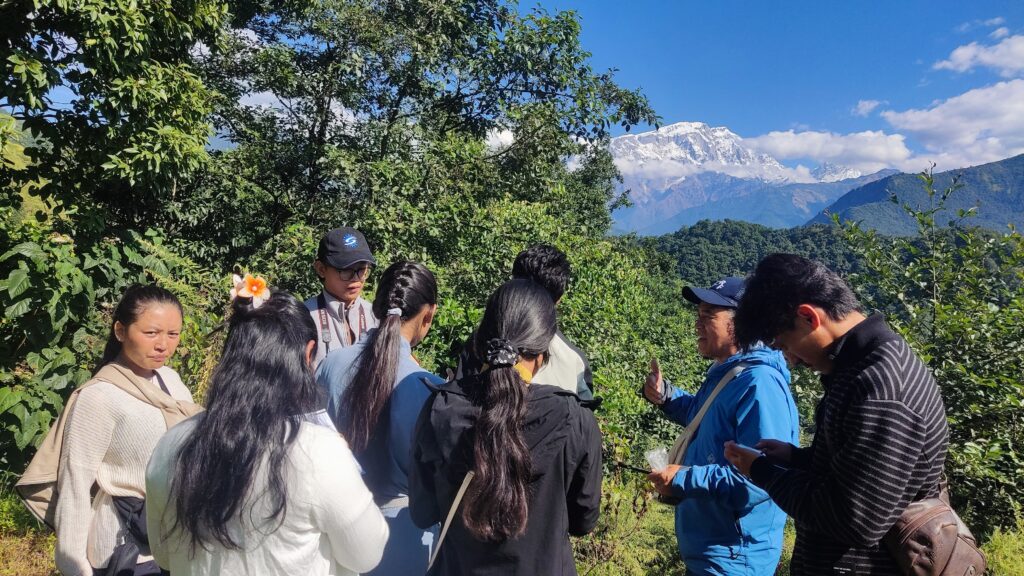
Working in the Annapurna region transformed both his career and his outlook on life. Under the leadership of the late Mingma Norbu Sherpa, the founding Project Director of ACAP, he travelled from village to village, meeting local communities and helping implement programmes on conservation, tourism, education, drinking water, women’s empowerment, child-care centres, and community development. These years taught him that successful conservation is not achieved by protecting forests alone, it succeeds when local people become partners in protecting nature.
Mingma Norbu Sherpa became his greatest professional mentor. Believing in the potential of young conservationists, Sherpa encouraged Dr. Gurung to continue his education abroad. He arranged an interview with Sir Edmund Hillary, then New Zealand’s High Commissioner to Nepal, India and Bhutan. That meeting led to Dr. Gurung receiving the prestigious New Zealand Government Scholarship, a life-changing opportunity that opened the door to international education.
At Lincoln University in New Zealand, he completed both his Bachelor’s and Master’s degrees with Honours in Parks, Recreation and Tourism Management. Studying in one of the world’s leading institutions exposed him to modern conservation science, protected area management, sustainable tourism, and community participation. More importantly, it strengthened his belief that conservation and development should always go hand in hand. Rather than keeping his knowledge abroad, he returned to Nepal with a clear vision of applying international experience to local challenges.
Back in Nepal, Dr. Gurung continued to expand his contribution to sustainable development. After nearly a decade with ACAP, he joined the United Nations Development Programme (UNDP) in 1996 as Project Manager for the Agenda 21 Programme. Working across several districts, he promoted integrated development that balanced economic growth, environmental protection, and social well-being. His team also contributed to preparing Nepal’s Sustainable Development Agenda under the National Planning Commission, helping shape national thinking on sustainable development.
Each stage of his journey prepared him for greater responsibility. From a young project assistant walking through remote Himalayan villages, he was becoming a leader capable of connecting communities, governments, and international organisations around a shared vision for conservation. Yet, despite his growing success, he never forgot the values he had learned in Sikles, humility, perseverance, and respect for both people and nature.
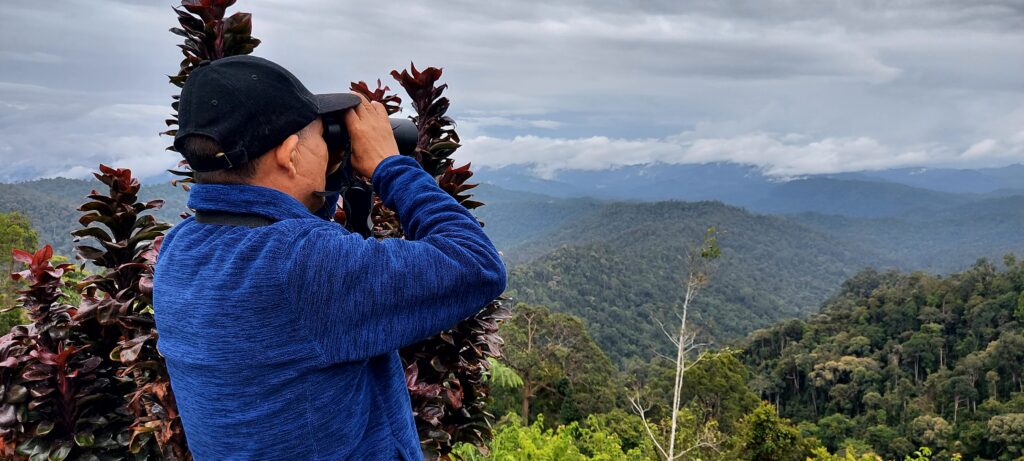
His desire to learn never stopped. Believing that education is a lifelong journey, Dr. Gurung moved to Australia in 2005 to pursue a PhD in Conservation Science at Griffith University. His doctoral research explored how the Annapurna Conservation Area had become a globally recognised model for balancing biodiversity conservation with community development. In 2008, he successfully completed his doctorate, becoming one of the first people from Sikles to earn a PhD and bringing international recognition not only to himself but also to his village and Nepal.
Completing his PhD in 2008 marked another important milestone in Dr. Hum Bahadur Gurung’s journey. His research on the Annapurna Conservation Area demonstrated how conservation could succeed when local communities were placed at the centre of decision-making. The study strengthened his reputation as a conservation professional who could combine academic research with practical experience. More importantly, it reinforced his lifelong belief that protecting nature and improving people’s lives should always go hand in hand.
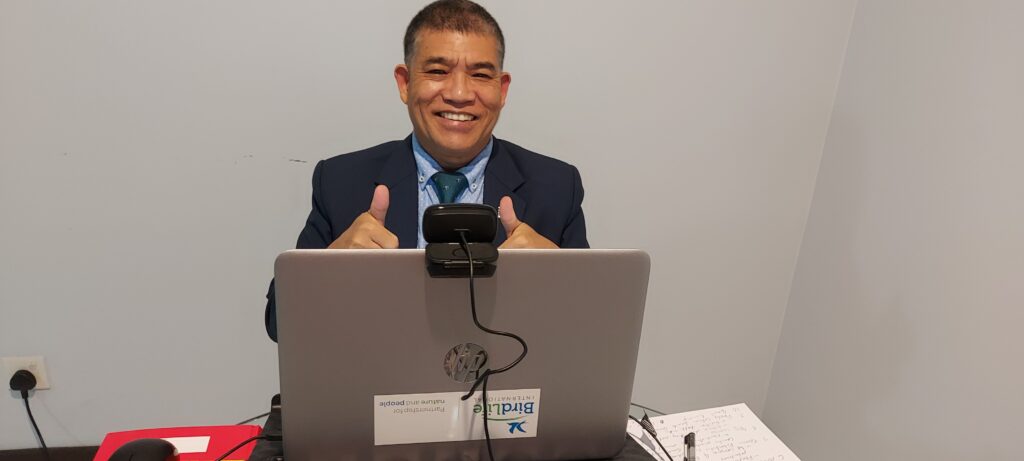
After returning to Nepal, Dr. Gurung became the Chief Executive Officer of Bird Conservation Nepal (BCN), the national partner of BirdLife International. Although birds had not been his original area of expertise, he embraced the challenge with curiosity and determination. Under his leadership, BCN expanded its conservation programmes, strengthened partnerships, and promoted research, education, and community participation in bird and biodiversity conservation. His experience proved that true leadership is not about knowing everything from the beginning but about continuously learning and inspiring others to work towards a common goal.
In 2012, driven by his vision for sustainable development, Dr. Gurung established the Himalayan Sustainable Future Foundation (HSFF). The organization promotes biodiversity conservation, sustainable tourism, climate resilience, protected area management, and community development. Through HSFF, he has continued to encourage practical solutions that combine scientific knowledge with local experience, helping communities manage their natural resources while improving their livelihoods.
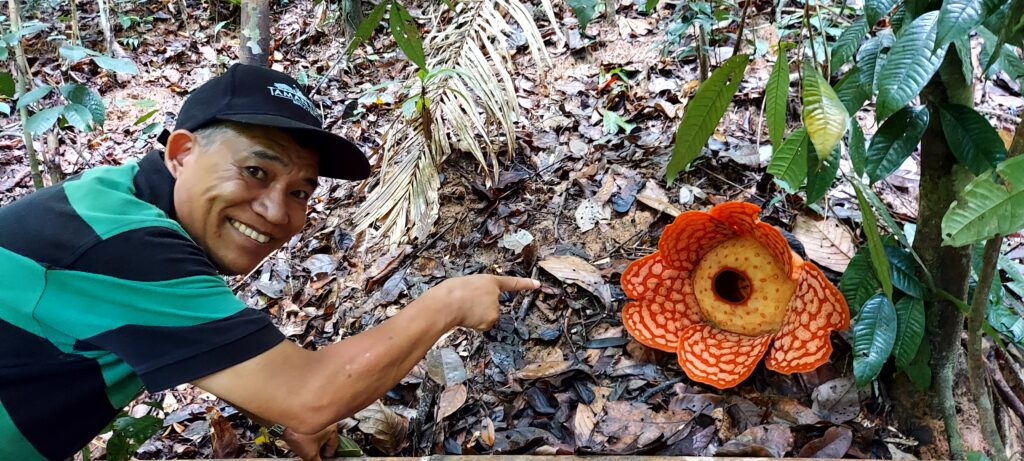
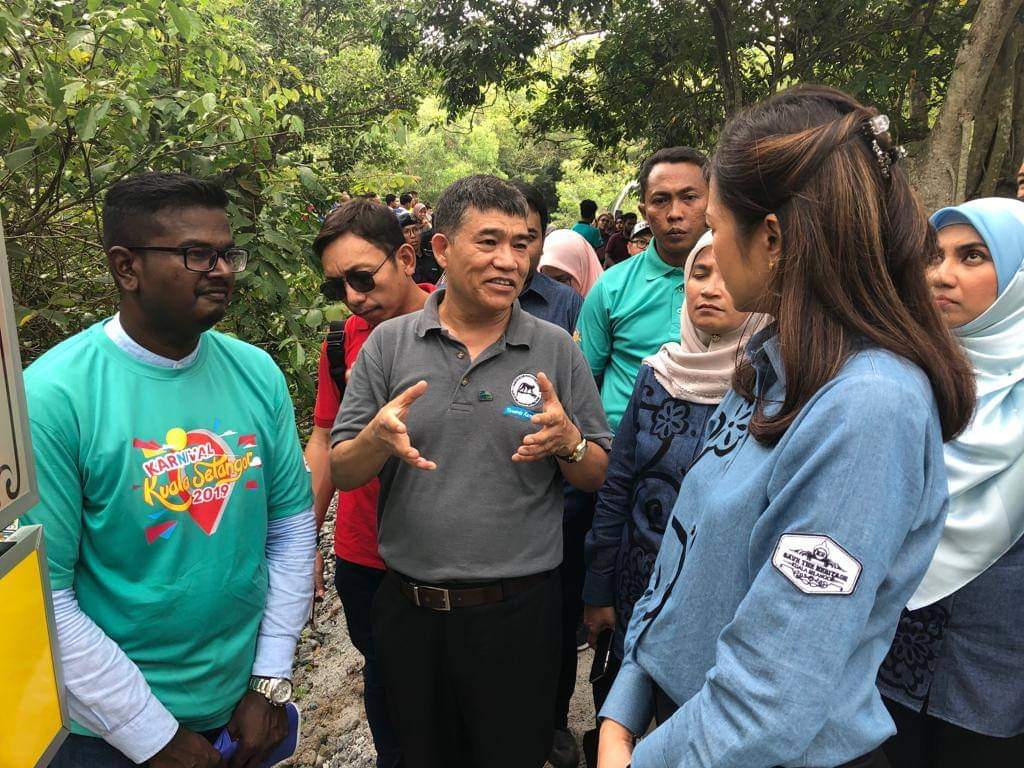
His growing international reputation opened another chapter in 2015 when he joined BirdLife International Asia as Asia Partnership Manager. Based initially in Singapore and later in Kuala Lumpur, Malaysia, he has worked with conservation organizations across Asia, supporting partners in countries including Nepal, India, Bhutan, Sri Lanka, Bangladesh, Japan, Indonesia, Thailand, Malaysia, the Philippines, and Papua New Guinea. His role extends beyond managing projects; he helps build partnerships, strengthen institutions, mentor conservation leaders, and encourage collaboration across borders. His work demonstrates that environmental challenges do not stop at national boundaries and require collective action.
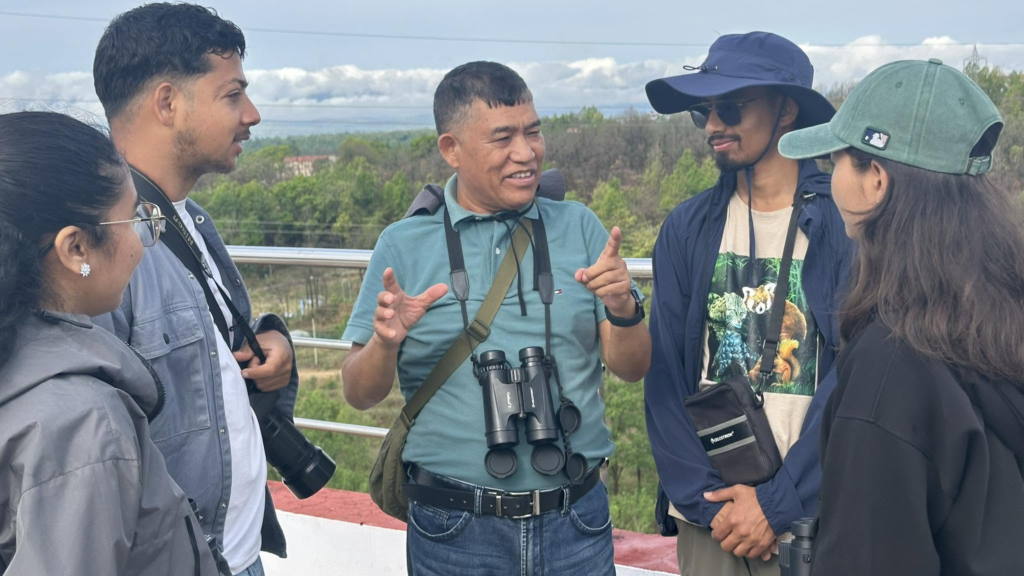
Between 2017 and 2022, Dr. Gurung led the Asia-Pacific Forest Governance Project, funded by the European Union. Working across Indonesia, Malaysia, the Philippines, and Papua New Guinea, the project strengthened forest governance, promoted community participation, and encouraged the use of modern technology for forest monitoring. It also supported indigenous communities in protecting forests while improving transparency and sustainable resource management. The project reflected Dr. Gurung’s long-standing belief that local communities are not beneficiaries of conservation but its most important partners.
Alongside his leadership roles, Dr. Gurung has made significant contributions as a researcher, educator, policy adviser, and mentor. His publications cover biodiversity conservation, protected area management, ecotourism, environmental governance, climate change, and sustainable development. He has presented Nepal’s conservation experiences at international conferences, delivered lectures at universities, supervised students, and advised governments and conservation organizations. His ability to connect scientific research with practical field experience has earned him respect from academics, policymakers, and practitioners alike.
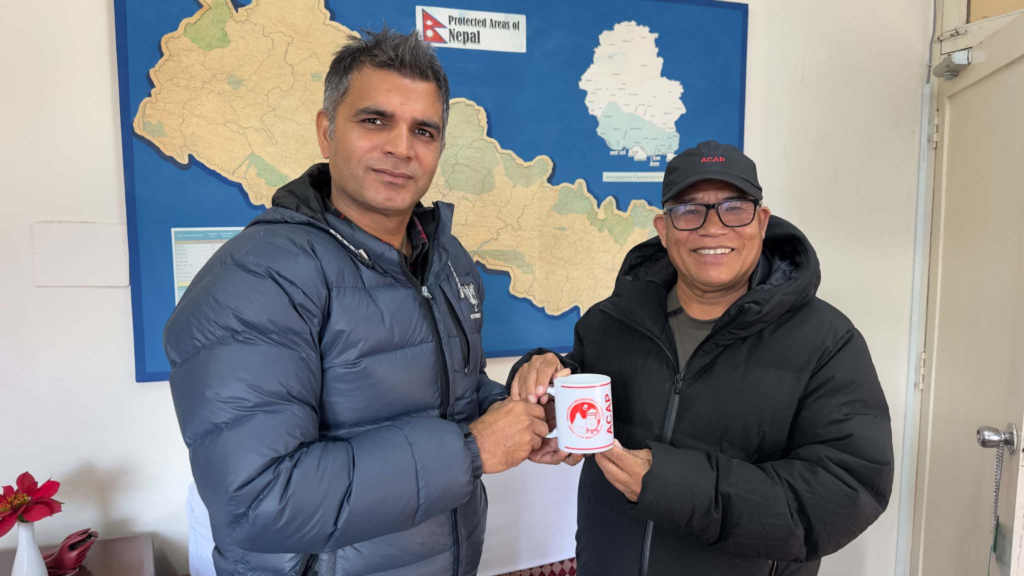
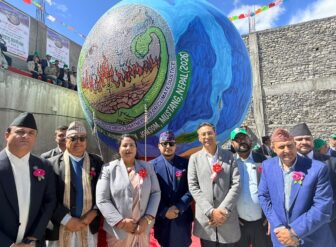
Over more than four decades, his dedication has been recognised through several prestigious national and international honours. In 2014, he received the Australian Alumni Award for Community Service, recognising his contribution to conservation and community development. Griffith University honoured him with its Outstanding International Alumnus Award in 2019, celebrating his global leadership in environmental conservation. In 2022, he received the Asia Impact Game Changer Award from Advance; The Global Australian Network for his outstanding contribution to environmental sustainability and community development. Most recently, in 2026, he was honoured with the Nature Conservation Award, further acknowledging his lifelong commitment to protecting biodiversity and promoting sustainable development. Yet, despite these recognitions, Dr. Gurung often says that his greatest achievement is seeing local communities become confident custodians of nature.
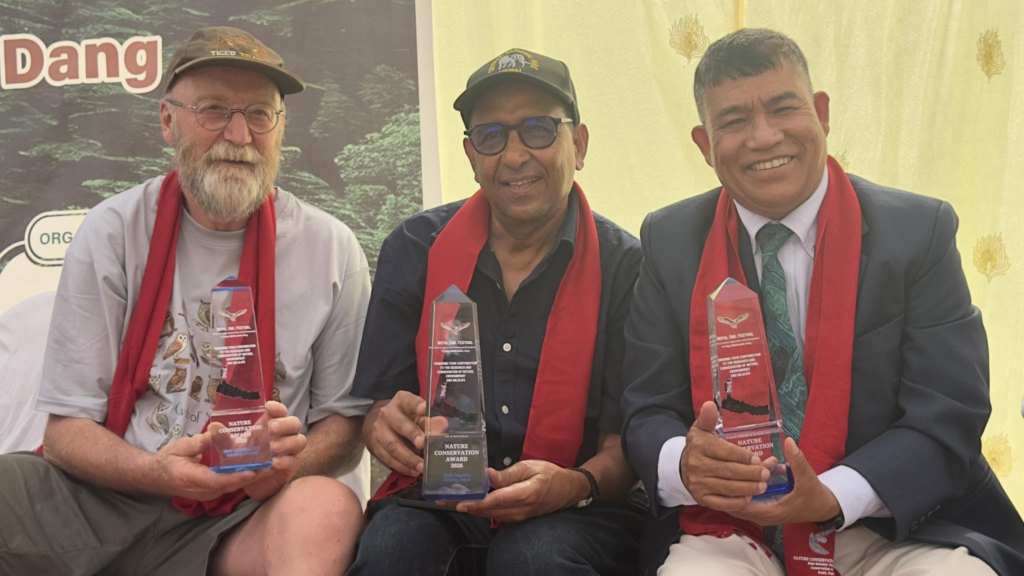
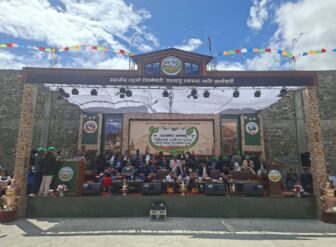
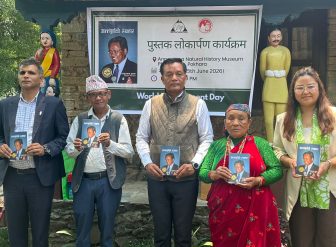
Dr Gurung (Right) recently received the Nature Conservation Award in Lamahi, Dang, during the Nepal Owl Festival.
Beyond his professional career, Dr. Gurung remains deeply committed to education and community service. He served as President of the Chandra Gurung Conservation Foundation, established in memory of his late mentor, and as Chairperson of the Tamu Educational and Career Advancement Network (TECANET), which supports students through scholarships, career guidance, and leadership development. He believes that investing in young people is one of the most meaningful ways to create lasting change.
One philosophy has guided Dr. Gurung throughout his career. He often explains that conservation should never be separated from people. According to him, preservation means protecting nature from human use, while conservation means using natural resources wisely so they continue to benefit both present and future generations. For him, conservation is not about choosing between people and nature; it is about creating harmony between them. This belief has shaped every project he has led, from mountain villages in Nepal to regional programmes across Asia.
He also speaks passionately about the environmental challenges facing Nepal and the world. Climate change, unplanned infrastructure development, declining river ecosystems, and the loss of biodiversity are issues that concern him deeply. He believes Nepal’s forests, rivers, wetlands, and mountain landscapes are invaluable national assets that must be protected through science, good governance, and strong community participation. He also encourages greater investment in conservation research, especially on birds and lesser-known species that serve as important indicators of environmental health.
Behind his professional success is a family that has shared his passion for conservation. His wife, Purna Gurung, also began her conservation journey through the Annapurna Conservation Area Project, and together they have devoted much of their lives to protecting nature. Today, they are encouraged to see younger members of their family developing the same appreciation for the environment. For Dr. Gurung, conservation is not simply a profession, it is a way of life that can be passed from one generation to the next.
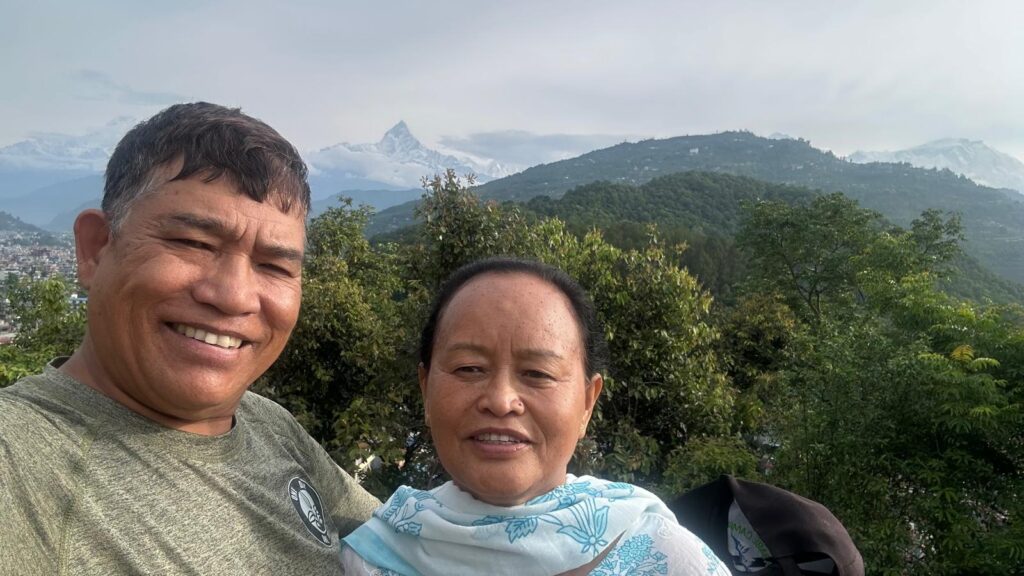
Dr Hum Gurung with his wife, who has been supporting his career throughout
Although he has already achieved more than many people dream of, Dr. Gurung continues to look ahead. One of his greatest aspirations is to establish a School of Sustainable Living in Chiya, Thak, Kaski, where young people can learn directly from nature through practical experiences. He believes that many children today are becoming disconnected from the natural world and that future leaders must understand sustainability not only through textbooks but by experiencing forests, rivers, wildlife, and local communities firsthand. His vision is to create a learning centre where traditional knowledge and modern science come together to inspire responsible global citizens.
Looking back, the journey of Dr. Hum Bahadur Gurung is far more than a story of personal success. It is the story of a village boy who dared to dream beyond the mountains, embraced every opportunity to learn, and dedicated his knowledge to serving both people and nature. From walking barefoot through Himalayan trails to representing Asia in global conservation forums, he has remained guided by the same values that shaped him as a child, humility, hard work, integrity, and compassion.
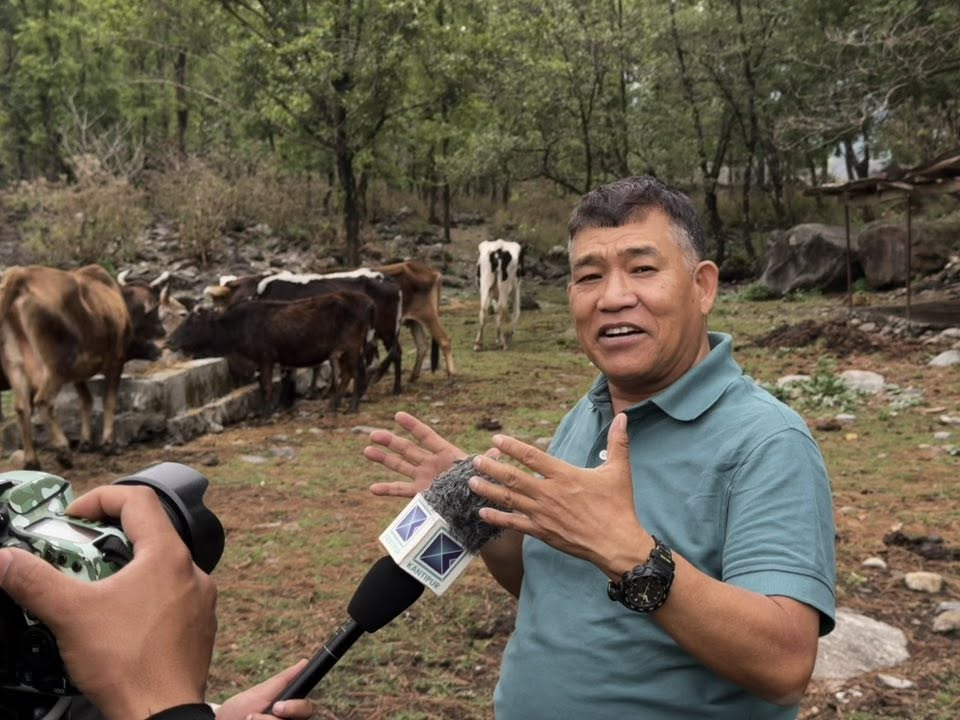
Today, his legacy is reflected not only in awards, publications, and leadership positions but also in healthier landscapes, stronger institutions, empowered communities, and countless young conservationists inspired by his example. His life reminds us that real leadership is measured not by titles but by the positive impact we leave on others.
Dr. Hum Bahadur Gurung’s journey proves that extraordinary achievements can grow from the humblest beginnings. His story is a powerful reminder that with determination, education, and a genuine commitment to serving others, one person can make a lasting difference, not only in a village or a country, but across the world. Above all, his life reflects the principle he has followed for more than four decades: living in harmony with nature while creating opportunities for people to thrive alongside it.