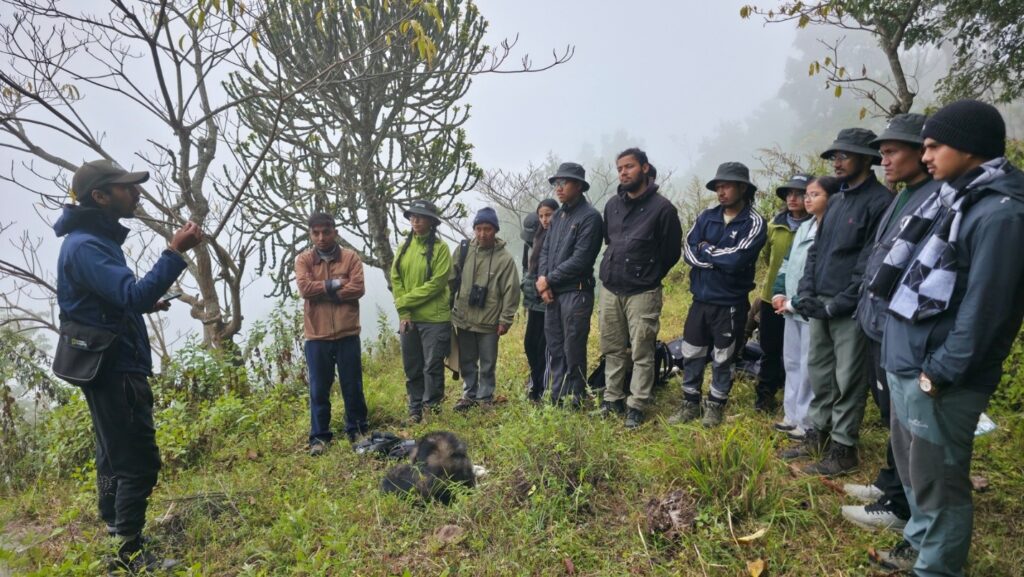
Chandra Nath of Baitadi is thrilled to have the opportunity to observe and identify butterflies from such close range. A student at the Institute of Forestry in Pokhara, she says this is an experience she will cherish for the rest of her life.
“I had the opportunity to study forestry, but this is the first time I have been able to understand these creatures of nature so closely. I will never forget this experience,” she says.
For Ashish Shrestha of Biratnagar, the time spent in the forests of Syangja has also been filled with new experiences. For the first time, he has installed an automatic camera in the forest to monitor wildlife activities. Known as a camera trap, the technology detects movement when an animal enters its monitoring range and automatically captures photographs. Shrestha, who is pursuing a master’s degree in aquatic resources in Rampur, considers himself fortunate to have been selected for the training.
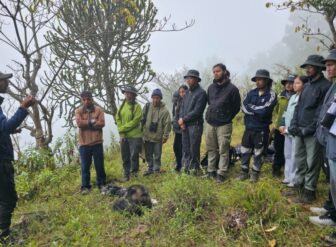
Like Chandra and Ashish, 15 students from different universities across Nepal, studying forestry, environmental science, veterinary science, geology and zoology, have gathered at Rangbhang-Bhaisegauda in Syangja. They are participating in a 19-day Wildlife Research Methods Training programme organised by Friends of Nature (FON).
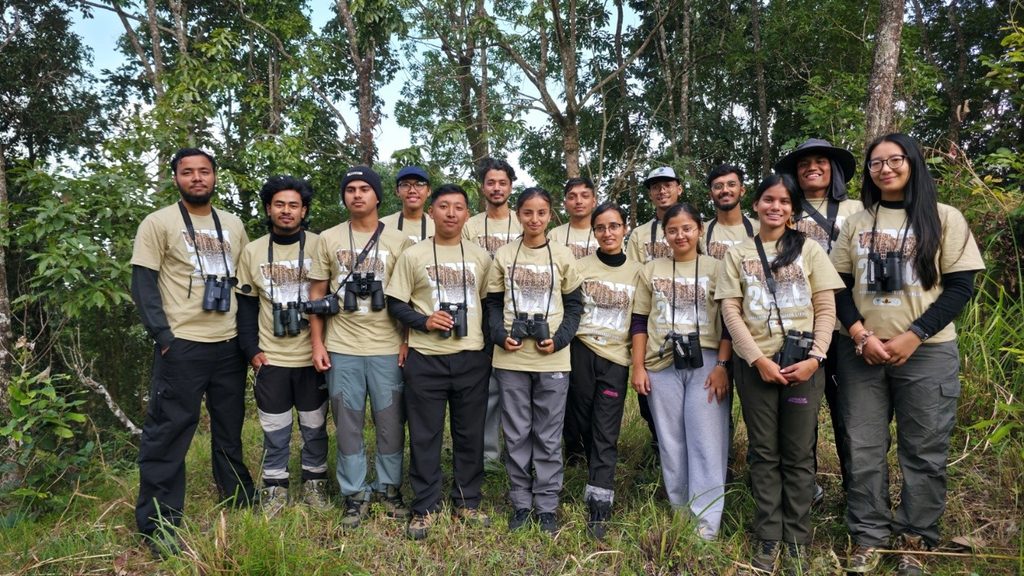
The main objective of the programme is to connect students, who primarily acquire theoretical knowledge in classrooms, with nature through practical learning. It aims to equip them with the skills to identify wildlife, understand animal behaviour and conduct field-based research.
Since its launch in 2012, a total of 241 participants have completed the training. According to the organisers, many of the former participants are now actively involved in wildlife research and conservation.
Suman Sapkota of Palpa attended the same training seven years ago. Today, he is one of its trainers. He says the programme covers a wide range of subjects, including understanding nature and biodiversity, research techniques, stress management, effective presentation skills, research proposal and report writing, poster preparation, conservation-themed drama and the use of artificial intelligence (AI).
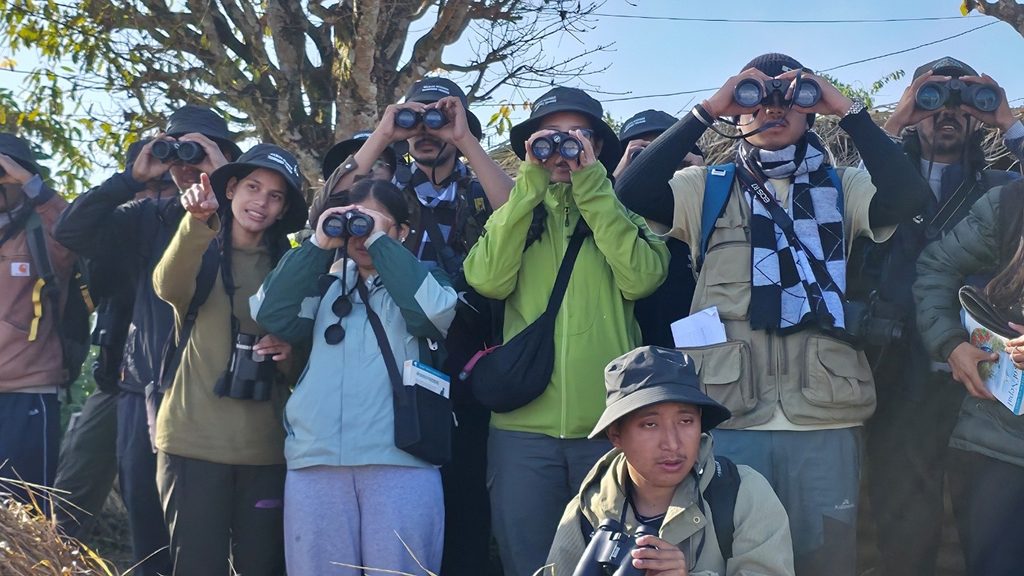
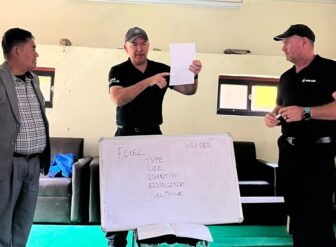
“The training builds confidence and motivates participants to pursue careers in wildlife research and conservation,” Sapkota says.Another trainer, Binay Ghimire of Palpa, says collecting data alone is not enough for scientific research. Equally important are the abilities to analyse collected data scientifically and present the findings in a way that others can easily understand. Therefore, the training focuses on every stage of the research process through practical exercises, he says.
Participants learn to identify birds, butterflies, frogs, snakes, mammals and plants. They also take part in direct field observations, sample and data collection, and practical exercises using various research methods.Field sessions begin as early as 6 am and sometimes continue until midnight. Participants also get opportunities to interact directly with experienced researchers and conservationists, learn about their work and experiences, and raise questions.
Dr. Yadav Prasad Ghimire, one of the initiators of the training programme, says it was launched with the aim of developing basic wildlife study and research skills among the younger generation.In its initial years, the programme trained only 10 participants annually. However, considering the growing interest and demand among students, the organisers have expanded it to accommodate around 28 participants each year in two batches.
Despite increasing interest in the programme, a lack of financial resources has emerged as a major challenge. According to the organisers, unless sufficient financial support is secured, they may have to reduce the number of participants to just 14 from next year.The programme, which has been working to develop skilled human resources for wildlife research and conservation, now faces uncertainty over its continuation due to financial constraints.
After conducting field sessions in Chitwan, Nawalpur and Parbat, the training has now reached Syangja. Its current field activities are being conducted in the border areas of Putalibazar Municipality and Biruwa Rural Municipality. Bhaisegauda Community Homestay is responsible for local arrangements.
The Bernd Thies Foundation of Switzerland has been providing the primary financial support for the program, while the Accordio Foundation has been offering partial assistance.Raju Acharya, another initiator of the program and a conservationist, says the training was conceived to ensure that the younger generation does not have to face the same difficulties they encountered while learning research skills.
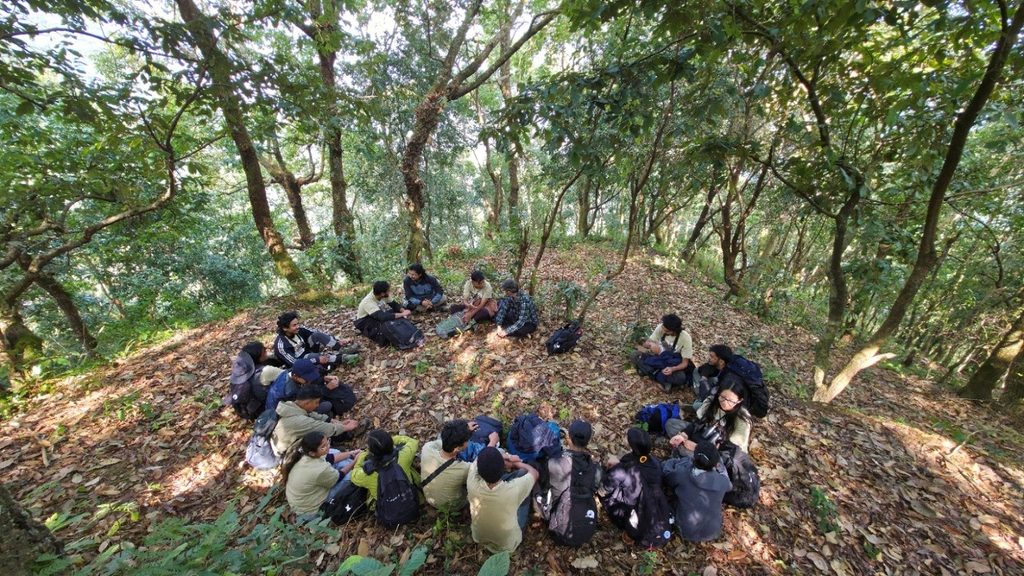
He says the programme was designed to address the lack of basic research skills, knowledge and opportunities that often prevent young people from entering the field of wildlife research and conservation.Acharya says former participants, who have gone on to work in research and conservation in different parts of the country, regularly share their experiences through emails. Reading about their work and achievements provides further motivation to continue the programme, he adds.
Seven years ago, Suman Sapkota and Binay Ghimire joined the same training to learn the fundamentals of wildlife research. Today, they are passing on their knowledge and experience to a new generation of learners.Students like Chandra and Ashish are now getting similar opportunities in the forests of Syangja to explore nature, develop research skills and consider future careers in conservation.
The organisers hope that the transfer of knowledge and skills from one generation to the next will help build a skilled workforce for wildlife research and conservation in Nepal.The programme’s greatest achievement lies in giving students an opportunity to understand nature not merely through textbooks, but through direct experience, observation and scientific research.