In a country, well-knowned for tigers, rhinos, and snow leopards, frogs rarely make the headlines. Policymakers often overlook them, and the media rarely highlight these small, unnoticed species.
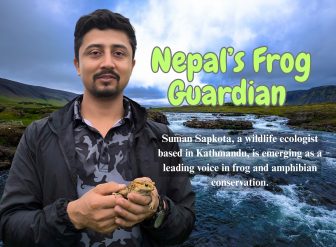
Yet in the quiet streams of Nepal’s mid-hills and high mountains, one young conservationist is changing that. Suman Sapkota, a wildlife ecologist based in Kathmandu, is emerging as a leading voice in frog and amphibian conservation.
Holding a Master’s in Zoology (Ecology and Environment) from Tribhuvan University, Sapkota built a strong academic foundation before moving fully into fieldwork. Today, he is the Program Coordinator at Friends of Nature (FON) Nepal, leading herpetofauna wing along with research, project implementation, donor coordination, monitoring, and capacity-building programs.
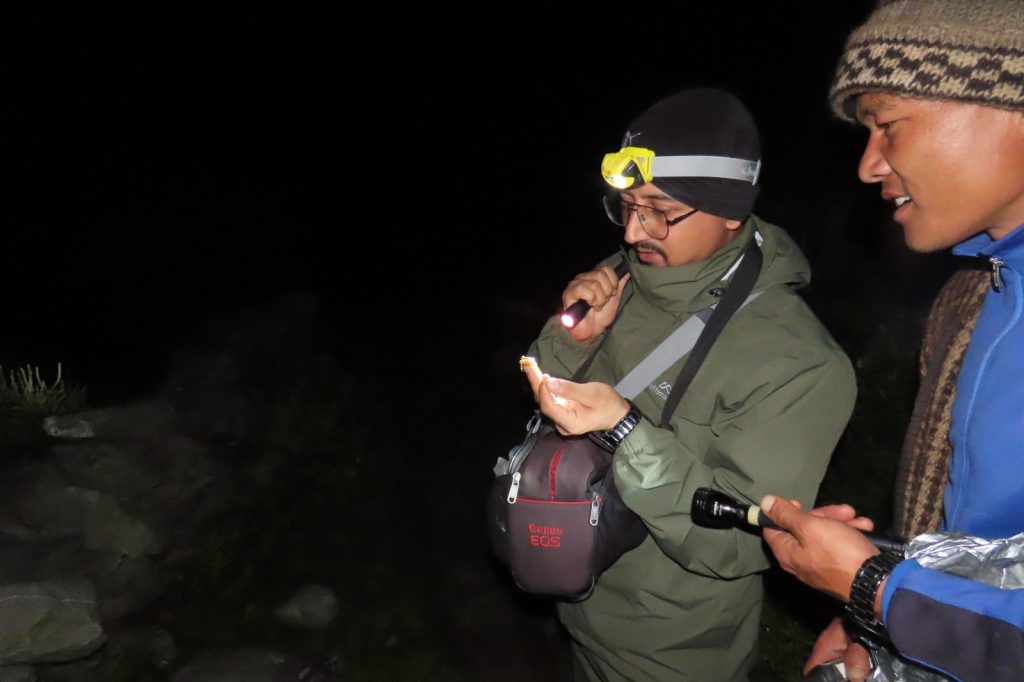
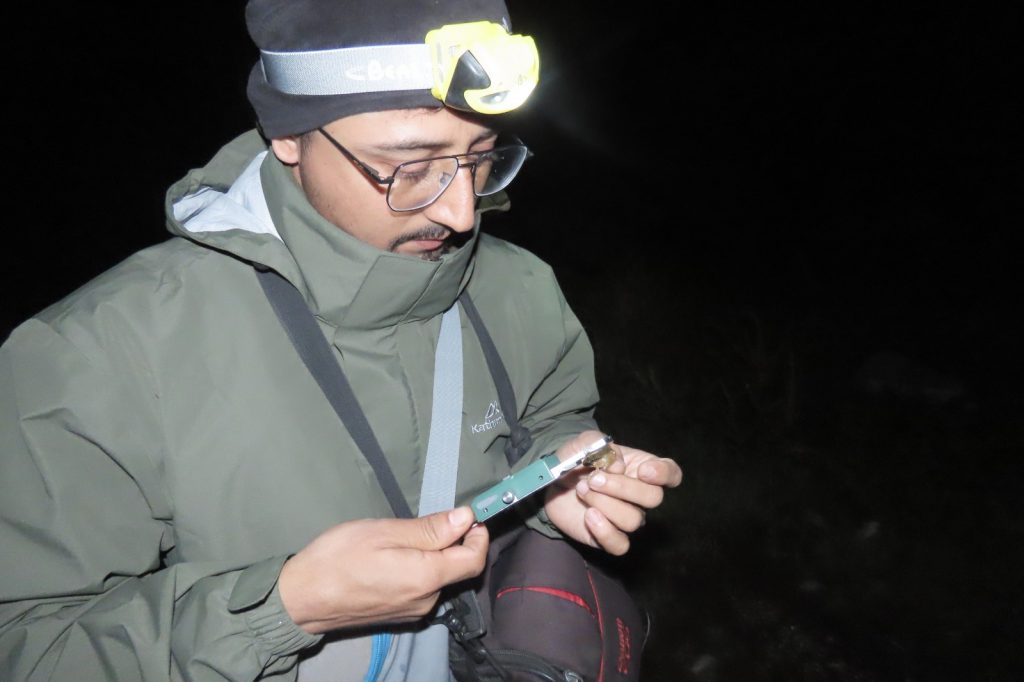
Sapkota began his work with a master’s dissertation on dietary ecology of frogs in the lowlands of Nepal. He has reached remote landscapes like Api-Nampa Conservation Area searching for cryptic Himalayan frogs. He noticed the low abundance of frogs in the area and knew about frog harvesting practices from locals. With his strong determination, he then shifts his focus towards documenting the intensity and magnitude of frog harvesting.
He gained recognition for leading the first scientific study on amphibian harvesting in Dhorpatan Hunting Reserve (DHR). Over 18 months, his team surveyed 16 sites and interviewed 50 households. The findings were alarming: about 32,000 stream frogs were harvested annually in just two villages, mostly large breeding females of the species Nanorana liebigii. Removing these females threatens population recovery, even if habitats remain stable. The work was funded by Amphibian Survival Alliance, who recognized Suman as Future Leader for Amphibian Conservation in 2024.
He then expanded his work in Annapurna Conservation Area (ACA) to found similar scenario. The Rufford funded project was successful to find details on serious issues of hunting with about 24,000-28,000 frogs harvested annually in two villages. Despite of these threats, he and his team were successful to record one of the endemic species- Mahabharat Torrent Frog from Tangting area. This finding gives both hope and challenge for species conservation. Local people are used to harvesting frogs by blocking streams, rolling over big stones and other substrates, disturbing the microhabitat of frogs. Also, without species identification skills, all the frogs encountered are being harvested, which is a serious threat for threatened and endemic species.
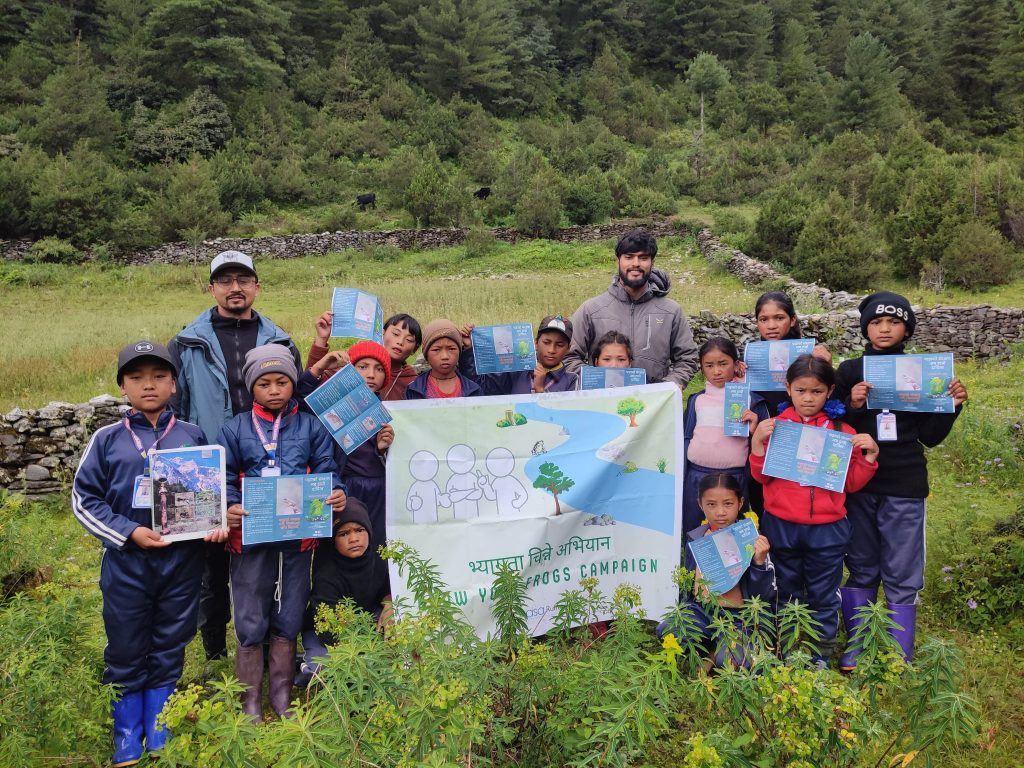
Sapkota was determined to overcome the gap in sharing science with community. He then conducted around 15 frog classrooms in various schools around DHR and ACA. To popularize frogs and improve species identification skills of local communities, he initiated ‘Know your Frog Campaign’, in which locals, students, and policymakers participate in guided visits to frog’s habitat to understand on ecology and identification cues.
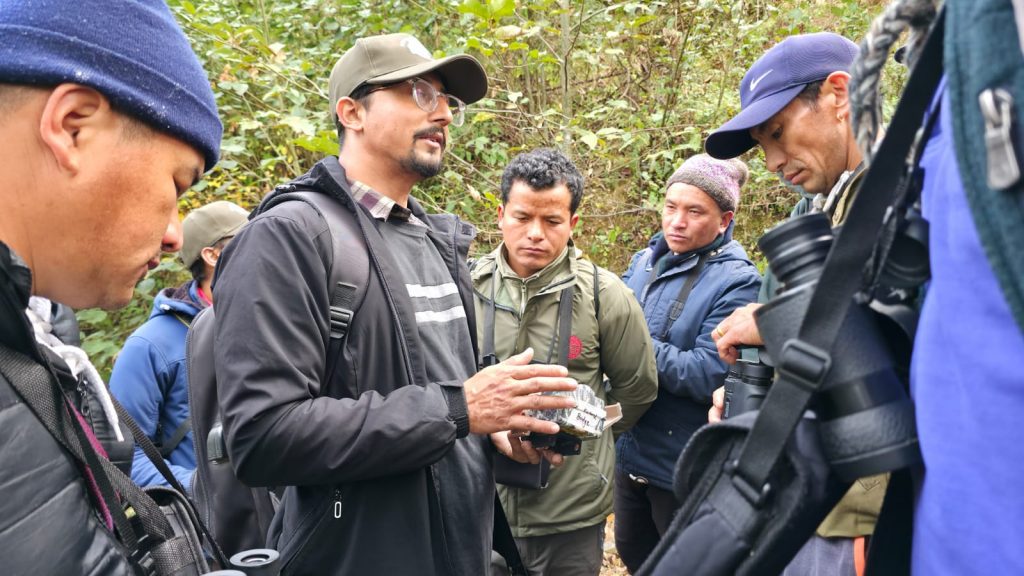
By documenting this overlooked threat, Sapkota turned anecdotal concerns into scientific evidence. His work was shared with reserve officials, local governments, and community members, who were trained to monitor frog populations. He also engages with local students, sharing his conservation message widely. Using field surveys, acoustic monitoring, and ecological modeling, he contributes to long-term biodiversity planning.
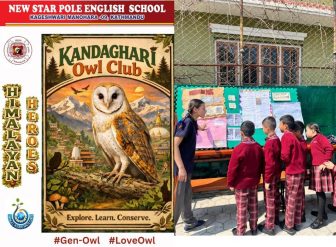
Sapkota has received international recognition and grants. In 2023, he won the Stiftung Artenschutz Amphibian Conservation Grant and Nagao Natural Environment Foundation Research Grant for protecting the globally threatened Rostand’s Paa Frog. He also received support from Fresno Chaffee Zoo for King Cobra conservation and Idea Wild Foundation for acoustic research on amphibians. He was also the team member of Whitley funded project in 2024 for conservation of owls in Nepal.
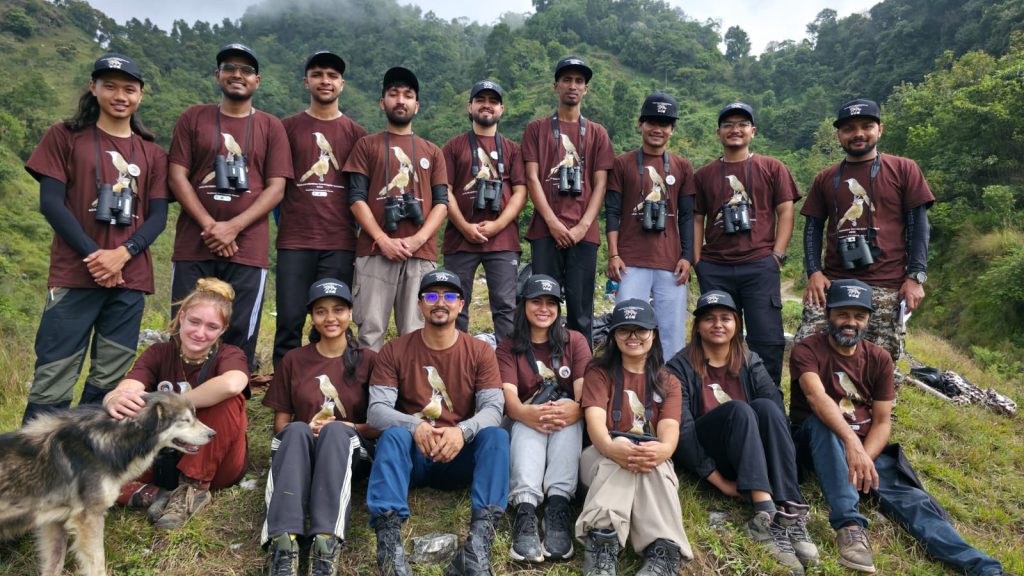
Although amphibians remain his focus, his conservation work is broad. He has been part of biodiversity expeditions and contributed to projects on clouded leopards, dholes, owls, and bats. He also mentors over 100 university graduates in wildlife research techniques, helping build the next generation of conservationists.
Scientifically, Sapkota has authored peer-reviewed publications on amphibians, birds, and mammals. He has presented at international events such as the ‘World Frog Summit’ and ‘International Wilderness Week’, and national events like the ‘Nepal Owl Festival’, and is affiliated with networks like ‘Save The Frogs!’ He also published a frog conservation booklet in local language mainly targeted to the students. With skills in GIS, remote sensing, ecological modeling, bioacoustics, and statistical analysis, Sapkota blends science with community engagement.
As Nepal faces biodiversity threats from habitat loss, climate change, and overuse of resources, leaders like Suman Sapkota are vital. By highlighting overlooked species such as frogs while protecting iconic mammals and birds, he shows that every species matters in maintaining ecological balance.
From his home district of Palpa, Sapkota’s journey has begun but there is still much further to go. When asked why he chose to work with such small and often overlooked creatures, Mr. Sapkota replied, ‘I got fascinated by the morphological variations within them and the way they hide even though their croak seems so loud and near. Besides their presence in pitch dark feels like there is all different life which often gets unnoticed and they should be explored.’